
To effectively practice drone flying, start by mastering the basic controls: throttle, yaw, roll, and pitch. Engage in foundational exercises like hovering and flying figure eights to build stability and coordination. Utilize flight simulators for risk-free practice, familiarizing yourself with maneuvers. Always conduct thorough pre-flight checks to guarantee equipment is ready. Experiment with different flight modes to enhance your skills, and keep safety protocols in mind, distancing yourself from people and checking weather conditions. Joining local clubs or online forums can provide valuable insights and accelerate your learning. There's much more to explore on refining your flying techniques and skills.
Understanding Basic Flight Controls

When you start flying a drone, grasping the basic flight controls is essential. The left control stick manages throttle and yaw. By pushing it up, you can increase altitude, while moving it left or right lets you rotate your drone in those directions.
The right control stick controls pitch, which enables you to move forward, backward, or sideways. Understanding these controls is important, especially in the context of the fundamentals of flying a racing drone, as the responsiveness of these controls varies depending on the flight mode you select—Cine, Normal, or Sport.
Mastering the four main drone controls—roll, pitch, yaw, and throttle—is essential for achieving stable flight and effective maneuvering.
As a beginner, it's important to focus on smooth inputs. This means making gradual adjustments rather than sudden jerks, which can lead to erratic flight patterns. Practicing basic maneuvers, like hovering and controlled directional flying, helps you build foundational skills.
The more you practice, the better your coordination with the control sticks will become. Developing this skill set will prepare you for advanced flying techniques later on.
Essential Practice Maneuvers
To master drone flying, you need to practice essential maneuvers that enhance your control and confidence.
Start with basic control exercises, then progress to advanced techniques like the Top Hat Maneuver and Manual Orbit.
Incorporating creative maneuvers such as the Power Loop can further improve your skills.
Don't forget to incorporate safety protocol practices to guarantee a responsible flying experience.
Basic Control Exercises
Mastering basic control exercises is vital for any aspiring drone pilot. Start with hovering, as this builds foundational control and stability. It's important for gaining confidence with the control sticks and understanding your drone's response.
Regular maintenance and pre-flight checks guarantee your drone is ready for these exercises, as highlighted in the Essential Drone Pilots Safety Guidelines. Once you feel comfortable, practice flying in figure eights and circles. These maneuvers help you refine your roll and pitch control while improving your overall flight path management.
Next, try the Top Hat Maneuver, which involves guiding your drone in a top hat shape. This exercise sharpens your spatial awareness and helps you maintain control in various orientations.
You should also conduct a manual orbit around a subject, allowing you to focus on maintaining the subject in view while controlling yaw and pitch together.
Don't forget to practice the 45-Degree Ascent and Descent maneuver. This enhances your video capture skills and altitude control by flying forward and backward at controlled angles.
Regularly incorporate obstacle avoidance drills into your practice. These exercises will prepare you for more complex maneuvers while making sure you develop essential skills for safe and effective drone flying.
Advanced Maneuver Techniques
As you progress in your drone flying journey, incorporating advanced maneuver techniques can greatly enhance your skills and confidence. Start by practicing the 45-degree ascent and descent, which improves your pitch control while capturing stunning video footage. This exercise helps you manage altitude effectively.
Next, try the top hat maneuver; flying in a circular pattern while ascending and descending sharpens your spatial awareness and control in various orientations.
Additionally, develop your proficiency with the manual orbit technique, focusing on circling a subject while maintaining control of your drone. This improves your ability to regulate the control sticks.
Another essential practice is flying figure eights, which enhances coordination between pitch and roll controls, leading to smoother directional changes and better flight stability.
Don't overlook hovering exercises; regularly practicing this skill at different altitudes builds your foundation for stability during more complex maneuvers.
Mastering these advanced techniques will considerably boost your drone performance, allowing you to navigate with precision and confidence. As you refine these skills, you'll notice improvements in your overall flying abilities, making your drone experiences even more enjoyable and fulfilling.
Safety Protocol Practices
Practicing safe flying habits is crucial for every drone pilot, regardless of experience level. One of the first things you should focus on is hovering. This skill helps you develop control over your drone's altitude and stability, which is critical for performing effective maneuvers. Engage in 45-degree ascent and descent maneuvers to improve your altitude control while moving, important for capturing dynamic video footage.
You should also practice the Top Hat Maneuver, where you fly in a circular pattern while moving vertically. This enhances your control in various orientations and boosts spatial awareness. Mastering the manual orbit technique, which involves circling a subject while maintaining focus, will further refine your control over yaw and pitch.
Additionally, regularly practicing basic maneuvers like figure eights, circles, and straight lines in open areas builds foundational skills and confidence.
Always keep in mind safety tips, like maintaining a safe distance from people and obstacles, to guarantee responsible drone usage. By incorporating these crucial practice maneuvers into your routine, you'll develop the necessary skills for safe and enjoyable flying experiences.
Developing Cinematic Skills

To develop your cinematic skills with a drone, it's vital to focus on the nuances of flight techniques and camera settings. Start by experimenting with varying altitudes and angles during your flights; this will enhance the framing and composition of your aerial shots, making them more dynamic.
By utilizing different flight modes, such as Cine mode for smooth, cinematic movements and Sport mode for faster, exciting shots, you can better match the style of each video you create.
Planning your flight paths is fundamental. Practice maneuvers like the Top Hat and Manual Orbit to guarantee smooth shifts and maintain focus on your subject.
Don't forget to incorporate ND filters during bright conditions; they help achieve ideal shutter speed and depth of field, greatly improving your production quality.
Additionally, regularly reviewing your footage allows you to refine your storytelling ability. By practicing your editing techniques, you can enhance the overall quality of your aerial videos.
Equipment Setup for Success
To set yourself up for success in drone flying, start with thorough pre-flight equipment checks to verify everything's functioning properly.
This includes inspecting propellers, batteries, and camera settings, as well as calibrating the compass and IMU for precise navigation.
Next, familiarize yourself with the drone's ideal settings, adjusting parameters to align with your specific practice goals for a more effective flying experience.
Pre-Flight Equipment Checks
Preparation is essential for a successful drone flight, and conducting thorough pre-flight equipment checks is a significant step.
Begin by inspecting your drone's physical condition. Look for any signs of damage to the body, propellers, and landing gear. This guarantees your drone is ready for safe operation.
Next, make certain all batteries are fully charged, including those for the drone and the controller. Low battery levels can lead to mid-flight failures, so this step is crucial.
Calibrating the drone's compass and IMU (Inertial Measurement Unit) is essential for maintaining stability and accurate flight performance.
Don't forget to remove any gimbal covers or protective gear that might hinder the drone's movement or camera functionality.
Confirming all components are ready for operation can save you from unexpected issues mid-flight.
Optimal Drone Settings
Once you've completed your pre-flight checks, it's time to focus on optimizing your drone's settings for a successful flight.
Start by ensuring your drone's firmware is updated. This enhances drone performance and gives you access to the latest features and safety improvements.
Next, calibrate the drone's compass and IMU, as this guarantees accurate navigation and stability during your flight.
Don't forget to adjust the camera settings according to the lighting conditions. Tweak the ISO, shutter speed, and white balance to optimize video quality and minimize post-production work.
Setting your drone to the appropriate flight mode—Cine, Normal, or Sport—based on your skill level is also essential. This selection directly affects responsiveness and speed, so choose wisely.
Safety Precautions for Pilots
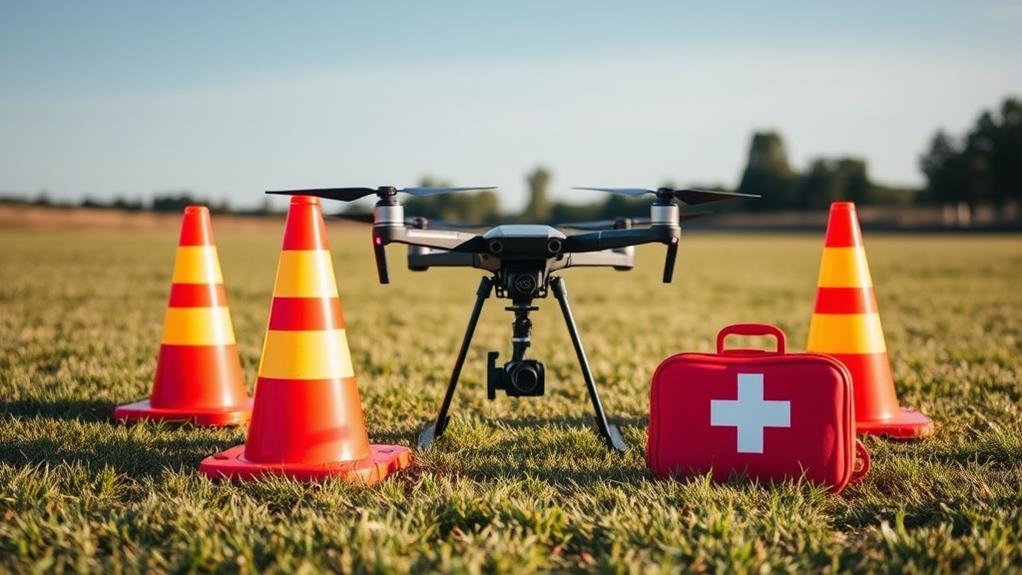
While flying a drone can be an exciting experience, prioritizing safety precautions is fundamental to guarantee smooth operations and protect those around you.
First, drone pilots must conduct a thorough pre-flight inspection. Check for physical damage, confirm the propellers are secure, and verify that batteries are fully charged to prevent mid-flight failures. Additionally, maintain a minimum distance from people, animals, and private property to minimize risks and adhere to safety regulations.
Using designated take-off and landing zones is essential for guaranteeing a safe environment during your operations. Avoid crowded areas to reduce accidents.
Furthermore, monitoring weather conditions closely is significant; avoid flying in rain, high winds, or low visibility, as these factors can severely affect your drone's performance.
Familiarizing yourself with emergency procedures, including the Return-to-Home (RTH) function, will prepare you for any unexpected issues. If you lose signal or encounter a malfunction, this function helps guarantee a safe landing.
Engaging With the Drone Community
Engaging with the drone community can greatly enhance your flying skills and knowledge. Joining local drone clubs offers you hands-on experience and the chance to network with seasoned pilots. You'll learn best practices and flying techniques that are vital for improvement.
Online forums and social media groups also provide a space for sharing tips and insights about various flying challenges, making it easier to find solutions.
Participating in drone events or competitions can further foster a community spirit, encouraging skill development and allowing you to showcase your flying abilities. These gatherings often feature workshops and demonstrations, which are excellent for learning.
Staying updated on the latest regulations is essential for responsible flying. Following industry news through dedicated channels keeps you informed about changes that could affect your practice.
Additionally, platforms like YouTube are valuable resources for tutorials and instructional videos, enhancing your understanding of both basic and advanced maneuvers.
Utilizing Flight Simulators
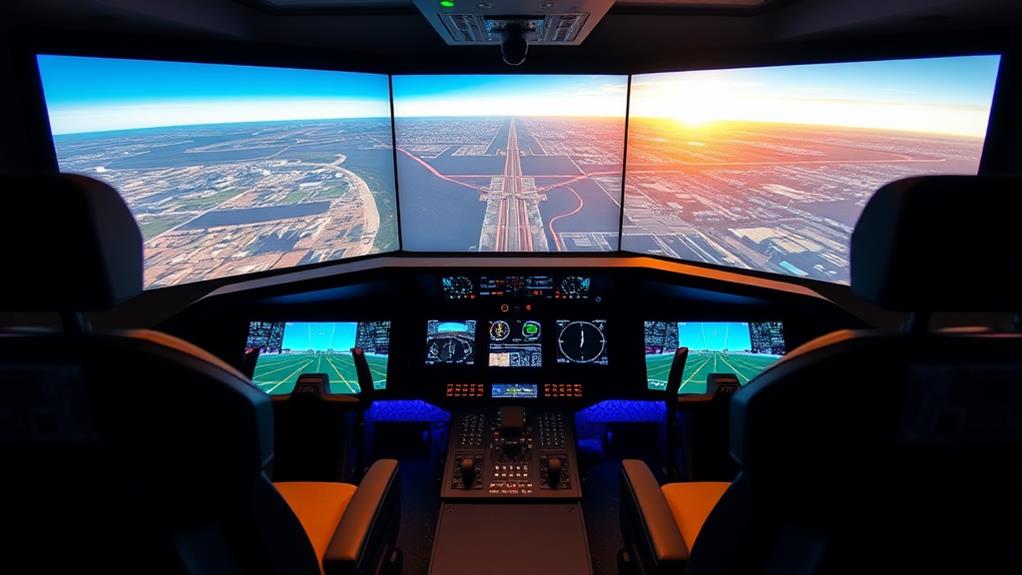
Using flight simulators is an effective way to hone your drone flying skills in a risk-free environment. These virtual platforms allow you to familiarize yourself with control stick movements and the intricacies of flight dynamics without the worry of crashing an actual drone.
Many simulators offer a variety of drone models and environments, letting you practice in different conditions, including wind and obstacles, which enhances your adaptability.
In a safe and controlled setting, you can repeatedly practice essential maneuvers such as takeoff and landing. Some simulators even include tutorial modes that guide you through advanced techniques like orbiting and waypoint navigation.
This structured approach helps build muscle memory, making it easier to transfer those skills to real-life flying. Regular practice on a flight simulator boosts your confidence and proficiency, ensuring that when you eventually take to the skies, you'll be more prepared.
Tracking Progress and Improvement
How can you effectively track your progress and improve your drone flying skills? Start by recording your practice sessions. This allows you to review performance and identify areas for improvement.
Keeping a flight log is essential; document each session, including maneuvers practiced, environmental conditions, and any challenges faced. This log will help you set specific goals for future flights.
Regularly setting measurable goals is another key technique. For instance, aim to master a new maneuver or improve flight stability within a certain timeframe. These focused objectives enhance your concentration and demonstrate your progress.
Engaging with the drone community is invaluable. Attend community events or local meetups to observe others and learn new techniques. You can also gain constructive critiques on your flying style, which can greatly boost your skills.
Additionally, utilize online platforms and forums to share videos of your flights. Feedback from experienced pilots can provide valuable insights and suggestions for improvement.
Continuous Learning Resources

Building on your progress tracking, continuous learning resources can greatly enhance your drone flying skills. Engaging with platforms like YouTube and specialized forums is a great way to access tutorials tailored for all skill levels. These resources can notably improve your techniques and maneuvers, especially as a beginner drone pilot.
Consider enrolling in extensive courses offered by organizations like UAV Coach, which has trained over 65,000 students. These courses focus on practical flying skills and regulatory knowledge, essential for learning how to fly effectively.
Joining local drone clubs provides hands-on experience and valuable networking opportunities with experienced pilots. These communities often share tips and insights that can accelerate your learning process.
Additionally, subscribing to industry newsletters and following drone-related social media accounts keeps you updated on advancements in technology and best practices.
Conclusion
To sum up, mastering drone flying takes practice and dedication. As the saying goes, "Practice makes perfect." By focusing on basic controls, essential maneuvers, and engaging with the community, you'll steadily improve your skills. Utilize simulators and track your progress to stay motivated. Always prioritize safety and continuously seek out learning resources to enhance your knowledge. With the right approach, you'll not only fly confidently but also enjoy the thrilling world of drone piloting.
Leave a Reply