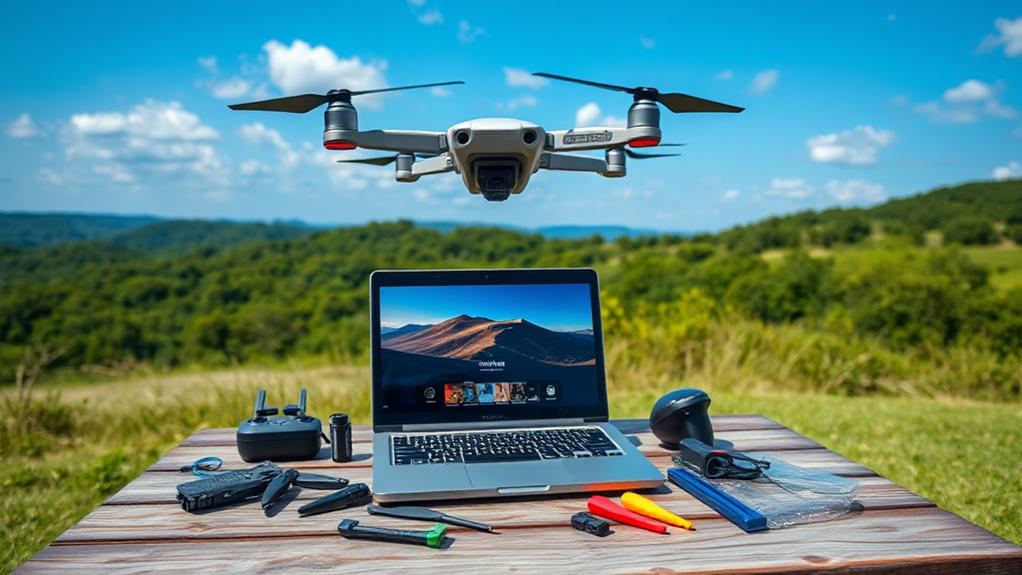
To succeed in sports drone operations, focus on these seven tips. First, understand basic controls like throttle and yaw. Next, choose an online course that covers FAA regulations and offers lifetime access to materials. Engage in virtual practice with simulators to build confidence. Joining online communities helps you gain insights from fellow pilots. Always review safety regulations to guarantee compliance. Create a detailed equipment checklist to avoid missing vital items. Finally, analyze live scenarios to refine your skills and techniques. By following these steps, you're on your way to mastering sports drone training, and more insights await.
Understand Drone Controls
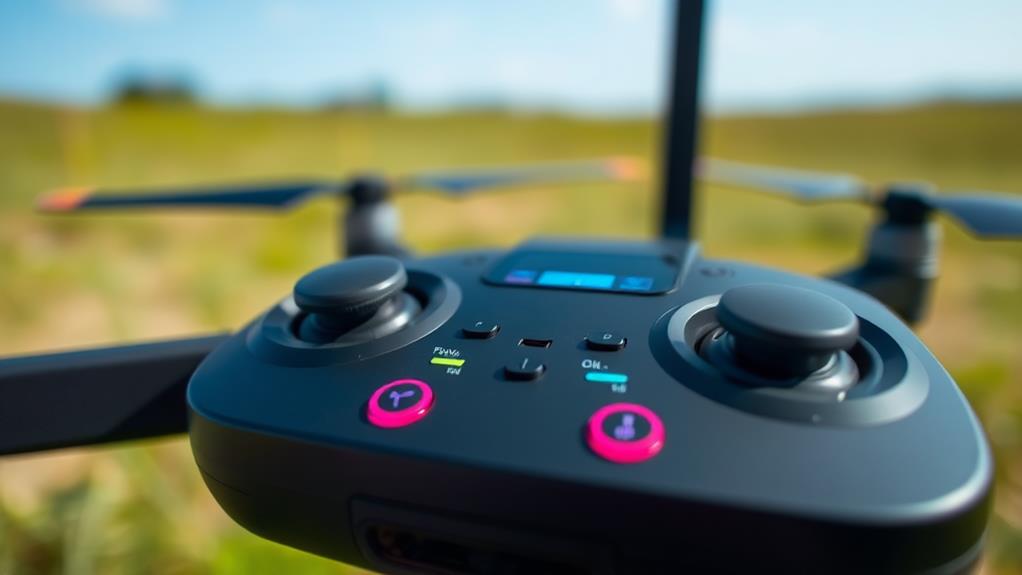
Mastering drone controls is fundamental for effective flying. To navigate your drone successfully, you need to familiarize yourself with the basic flight controls, such as throttle, yaw, pitch, and roll. These elements are essential for maneuvering your drone in various environments, and understanding specifications can help you select the right model for your needs, as noted in essential equipment for drone racing.
A great way to get started is to practice using a simulator. These programs let you control a virtual drone, allowing you to understand how your inputs affect the drone's movement without the risk of crashing in real life.
As you practice, pay attention to control stick movements. For instance, pushing the right stick forward makes the drone ascend, while pulling it back causes it to descend. Developing this muscle memory will enhance your real-life flying experience.
Additionally, understanding your drone's GPS features, like return-to-home functionality, is crucial; it helps you navigate the drone back to its launch point if you lose control.
Lastly, regularly review and practice emergency procedures. Knowing how to release the control sticks can help stabilize the drone in unexpected situations.
Choose the Right Online Course
Having a solid grip on drone controls sets the stage for further development in your flying journey. To elevate your skills, it's essential to choose the right online course for your drone training.
Look for a program that covers key topics like FAA regulations, flight principles, and safety protocols specific to sports analysis. A thorough curriculum guarantees you understand the rules governing drone operations, which is critical for responsible flying.
When selecting an online course, prioritize those that offer lifetime access to materials. This feature allows you to review complex techniques at your own pace, reinforcing your learning.
Additionally, practical training resources such as video tutorials and practice exams can greatly enhance your understanding and flying skills.
You should also consider courses with high pass rates, like 99.8% for KING customers on FAA exams. This statistic indicates effective teaching methods and a strong likelihood of your success.
Finally, verify the program is mobile-compatible, so you can learn and practice drone operations anytime and anywhere, accommodating your busy schedule.
Engage in Virtual Practice
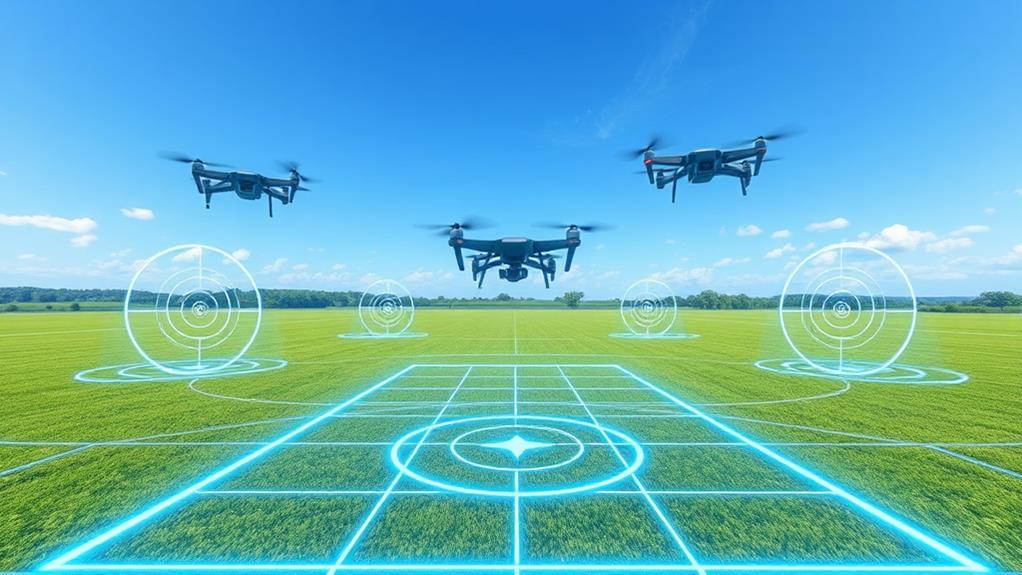
Virtual practice is a game-changer for refining your drone flying skills in sports analysis. By utilizing online simulators, you can replicate real-world flying conditions without the risk of damaging your equipment or injuring yourself.
These simulators allow you to practice maneuvers and techniques essential for becoming a proficient drone pilot. Additionally, opting for beginner-friendly models with good reviews can enhance your learning experience and boost your confidence in virtual settings to withstand potential crashes during practice.
Participating in virtual workshops and webinars hosted by experienced drone pilots provides invaluable insights into best practices and advanced techniques specific to sports analysis. You'll learn how to capture the perfect footage and analyze it effectively.
Additionally, video tutorials can be a great resource, showcasing various drone maneuvers and filming strategies that enhance your understanding of angles and perspectives.
Scheduling regular virtual practice sessions with peers is also beneficial. Simulating match scenarios helps improve your coordination in live analysis environments, making you a more effective drone operator.
You'll gain confidence and proficiency in flying drones while connecting with others who share your passion. Embrace virtual practice as a crucial component of your training regimen, and watch your skills soar as you prepare for real-world applications in the exciting field of sports analysis.
Join Online Communities
Online communities offer a vibrant hub for sports drone enthusiasts looking to enhance their skills and knowledge. By joining these online communities, you gain access to a wealth of shared experiences, tips, and insights from fellow drone pilots and professionals.
Participating in forums and social media groups allows you to ask questions, seek advice, and receive constructive feedback on your drone training progress and techniques. These communities often reflect the company's commitment to skill development, fostering a supportive atmosphere for learners of all levels, and can serve as a gateway for exploration, as seen in community connection fostered through forums and events.
Many of these communities host virtual events, webinars, and workshops that not only boost your skills but also keep you updated on the latest trends and technologies in sports drone analysis. Engaging with these groups enables networking opportunities, connecting you with potential collaborators, mentors, and job prospects in the drone sports analysis field.
Additionally, you'll find valuable resources such as training materials, guides, and best practices shared within these communities. This shared knowledge can accelerate your learning process and greatly improve your overall proficiency in drone operations specific to sports settings.
Review Safety Regulations
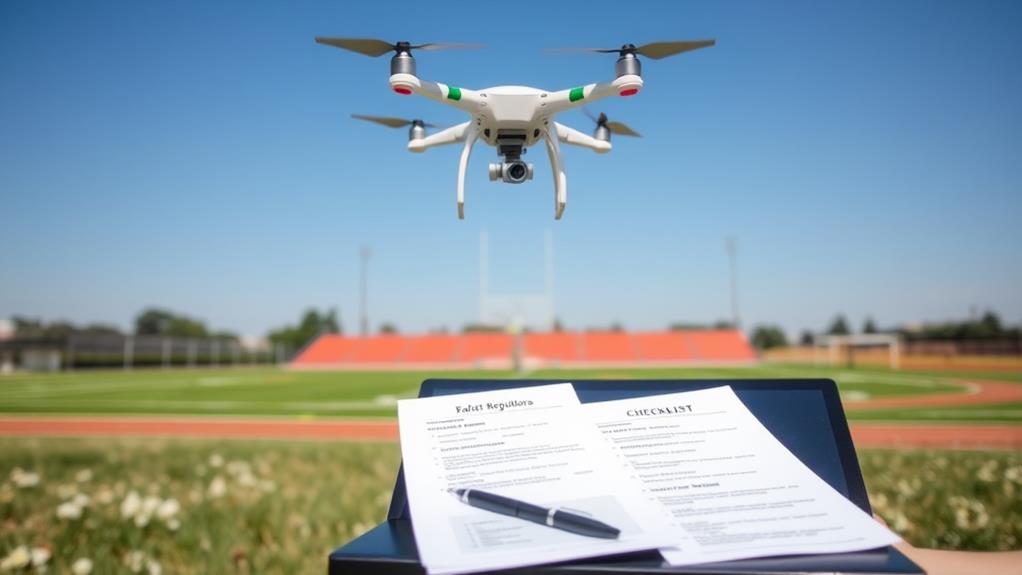
When it comes to flying drones for sports, understanding safety regulations is crucial for every pilot. Start by familiarizing yourself with the FAA regulations governing drone operations.
If you plan to use your drone for non-recreational purposes, you'll need a Remote Pilot Certificate. This certification guarantees you're knowledgeable about the legalities involved in drone flying.
You must also maintain a visual line of sight with your drone at all times. This practice enhances safety and helps you comply with the regulations. Be aware of restrictions on flying over crowds and near airports, as these areas pose significant safety hazards and potential violations.
Before each flight, conduct thorough pre-flight checks to guarantee your drone is in good working condition. Check battery levels, perform firmware updates, and test equipment functionality.
Additionally, stay informed about local and state laws, as they may impose additional restrictions beyond federal regulations.
Create an Equipment Checklist
After confirming you understand safety regulations, it's time to get organized for your training sessions. Start by creating a thorough equipment checklist to guarantee you have everything you need for successful drone operations.
First, list the drones and remote controllers, along with extra batteries and propellers to keep your flight uninterrupted.
Next, prioritize safety gear. Include goggles, a first aid kit, and a fire extinguisher to protect yourself and others during training activities.
Don't forget to gather all required documentation, such as registration papers and any necessary permits for drone operation, to ensure compliance with legal requirements.
Additionally, pack tools for post-flight analysis, like a laptop loaded with analysis software such as Nacsport, along with chargers to facilitate review sessions after your pilot test.
Maintenance tools are equally important; include a screwdriver set and cleaning supplies to keep your drone in peak condition throughout the training period.
Analyze Live Scenarios
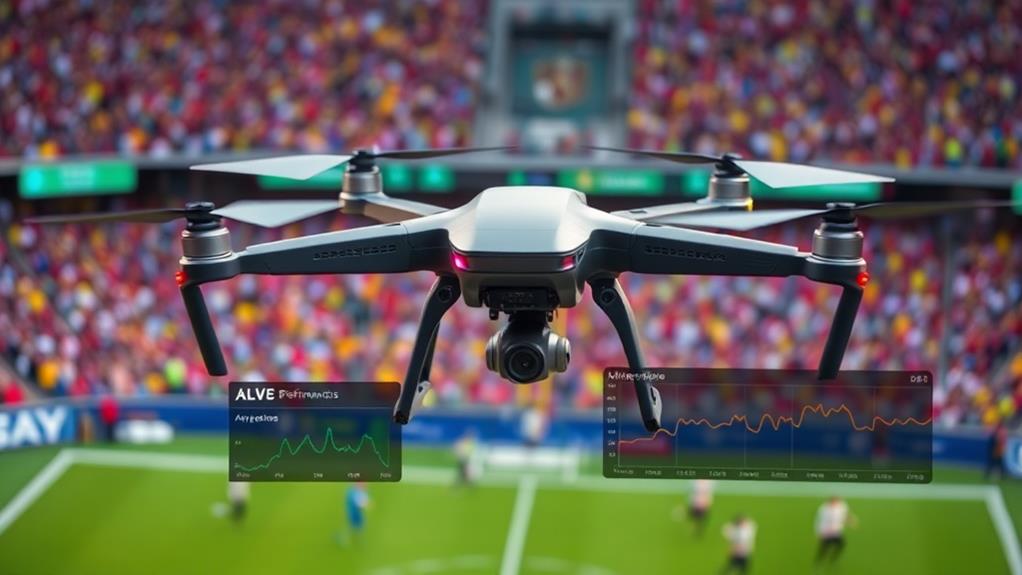
When you analyze live scenarios with your drone, you'll need to think on your feet and respond quickly to unexpected events.
Performance under pressure is essential, so practice your skills in various situations to build confidence.
Plus, adhering to safety protocols during live operations guarantees not just your safety, but also the integrity of the event you're covering.
Real-Time Problem Solving
Steering real-time problem solving during sports drone operations requires quick thinking and adaptability. When you're flying a drone, you'll need to capture real-time data that can greatly impact player performance analysis. Implement live tagging during your flights to guarantee you gather this important information, allowing for immediate feedback.
Using multiple drone feeds is essential, as it provides diverse angles and perspectives, enhancing your situational awareness of the event. Before you launch, conduct thorough pre-flight checks to verify all equipment, including spare batteries, is ready. This preparation helps you avoid interruptions during critical moments of live analysis.
Familiarizing yourself with the match location beforehand is another key step. Identifying ideal drone positioning can mitigate risks related to environmental factors, securing smooth operation.
Additionally, practicing drone operation in non-critical scenarios can enhance your control and responsiveness. This practice is important for effective problem-solving during live matches, where every second counts.
Performance Under Pressure
Effective performance under pressure is vital for sports drone pilots, especially during live scenarios. When you practice drone maneuvers in real-time settings, you build confidence and enhance your ability to react swiftly to unexpected challenges. This preparation is key for managing the complexities of live sports events.
Simulating high-pressure situations in your training—like operating your drone amid distractions or adverse weather—will help you feel more comfortable when it counts.
Utilizing tools like Nacsport's multi-angle analysis during matches allows you to assess your performance in real-time, providing immediate feedback to make quick adjustments. Pre-match rehearsals are also beneficial, as they familiarize you with the venue, reducing stress and improving your operational effectiveness.
Incorporating live tagging and real-time data collection into your practice sessions can further refine your skills. By monitoring critical performance metrics, you can gain insights essential for success in fast-paced environments.
Safety Protocols in Action
A drone pilot's safety protocols are fundamental for guaranteeing smooth operations during live sports events. Before you take to the skies, always conduct a thorough pre-flight inspection of your drone and its equipment. This guarantees safety and functionality, which is significant when you're under pressure.
Familiarizing yourself with local regulations and obtaining necessary permits for drone operation can help you avoid legal complications during training sessions.
It's also essential to practice operating your drone in various weather conditions. Understanding its limitations, especially in gusty winds, is important for maintaining stability during live scenarios.
Additionally, have a contingency plan for potential battery failures. Carry extra batteries and verify all equipment is charged before each training session to avoid interruptions.
Utilizing a checklist can streamline your operations. Prepare fundamental gear, including spare parts and a monitor for live feed viewing, to keep everything organized and efficient.
Remember, adhering to safety protocols not only keeps you compliant with FAA Part regulations, but it also enhances the overall quality of your drone operation.
Conclusion
In summary, mastering sport drone training online can feel like soaring through the skies with the speed of a cheetah. By understanding controls, selecting the right course, and engaging in virtual practice, you can elevate your skills dramatically. Joining communities and reviewing safety regulations guarantees you're not just flying high but flying smart. So, gear up, create that checklist, and analyze live scenarios—before you know it, you'll be maneuvering the drone world like a seasoned pro!
Leave a Reply