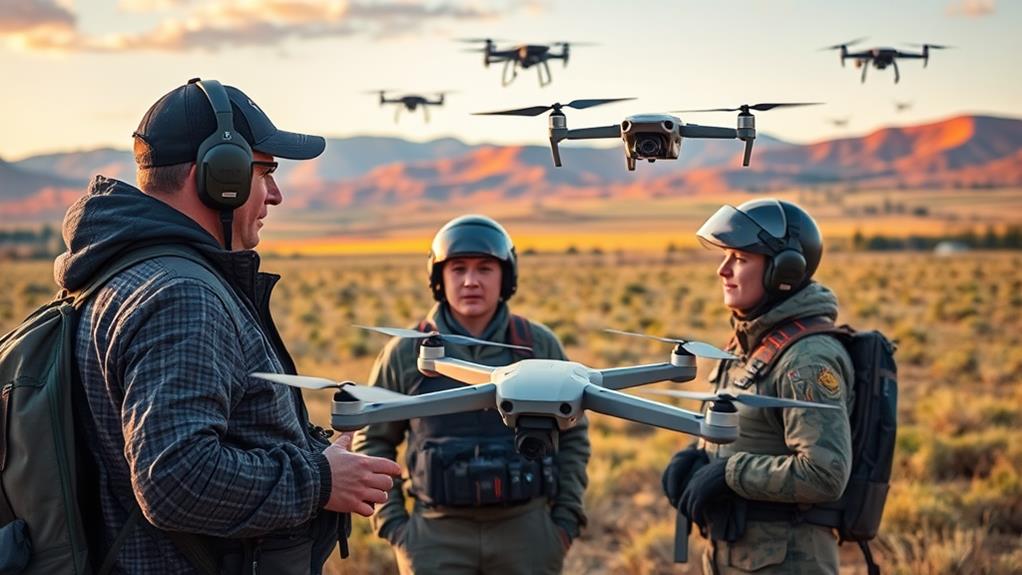
To effectively coach drone pilots, start with thorough pre-flight preparation. Confirm pilots check weather conditions and verify equipment status. Understanding airspace regulations is vital; familiarize them with local laws and no-fly zones. Teach effective flight techniques, focusing on smooth takeoffs, stable altitude maintenance, and gradual descents. Emphasize the importance of monitoring drone performance during flights. Encourage the use of advanced features like ActiveTrack for effective image capturing. Highlight the need for emergency procedures and communication skills among team members. By implementing these strategies, you set the stage for successful drone piloting, paving the way for further skill enhancements.
Pre-Flight Preparation Essentials
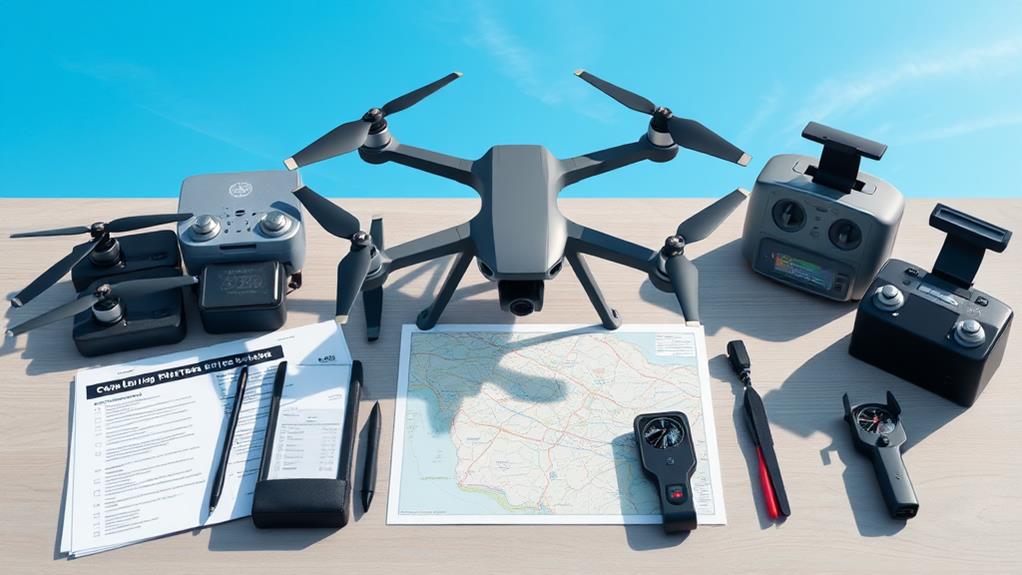
Before you take to the skies, it's vital to guarantee everything is in order for a safe and successful flight. Start by checking the weather conditions. Utilize apps like UAV Forecast to avoid rain and strong winds that could jeopardize your drone's performance. Additionally, be aware that extreme temperatures can affect battery performance and flight duration, so check the forecast for any potential temperature issues.
Next, conduct a thorough pre-flight checklist. Inspect your drone for any damage, verify the batteries are fully charged, and calibrate the compass properly. These steps are significant for ideal flight training and confirming airworthiness through regular maintenance and pre-flight checks.
Familiarize yourself with airspace regulations by consulting a drone map for no-fly zones. Understanding local laws will help you comply and avoid potential legal issues. During your flight, constantly monitor vital drone parameters, such as battery percentage, altitude (maximum 120 meters in Europe), and satellite signals. This vigilance guarantees safe operations and enhances your flying experience.
Lastly, practice flying in open spaces without obstacles. This will help you build confidence and control before attempting more complex environments. Following these pre-flight preparation necessities keeps you ready and safe, making every flight a successful one. Remember, proper preparation is significant for enjoying the excitement of drone flying!
Understanding Airspace Regulations
Understanding airspace regulations is essential for any drone pilot's safety and compliance. As a remote pilot, you must register your drone with the FAA if it weighs over 0.55 lbs.
Familiarizing yourself with airspace regulations is a significant part of your training, especially considering that local drone laws form the foundation for safe operations. This includes understanding no-fly zones, Natura2000 areas, and low-flying zones, which can be easily located using a drone map specific to your country.
In Europe, the maximum altitude for drone flights is set at 120 meters, or approximately 400 feet, to prevent interference with manned aircraft. When flying at night, you'll need to equip your drone with additional lighting to maintain visibility, ensuring your operation meets legal requirements.
Additionally, it's important to respect privacy laws. Avoid capturing images or videos of individuals without their consent, as this can lead to serious legal repercussions.
Effective Flight Techniques

Mastering effective flight techniques is vital for any drone pilot looking to enhance their skills and guarantee safe operations. By focusing on a few key strategies, you can improve your flying experience and make certain your drone remains in top condition.
Additionally, adhering to drone racing safety protocols can notably enhance your overall flying experience.
- Smooth Throttle Application: During takeoff, make certain a gradual increase in throttle. This helps achieve stable ascent and minimizes abrupt movements, reducing the risk of accidents.
- Steady Altitude: While hovering, maintain a steady altitude by using gentle control inputs. This enhances your drone's stability and gives you better control, especially in challenging conditions.
- Gradual Descent Techniques: When landing, practice gradual descent techniques. This prevents hard landings, protecting your drone's components and prolonging its lifespan.
Additionally, familiarize yourself with emergency procedures, including the return-to-home (RTH) functionality. This feature makes certain a safe recovery of your drone should unexpected issues arise.
It's essential to practice in open environments without obstacles. This helps you gain confidence in your flight techniques before moving on to more complex flying scenarios.
Monitoring Drone Performance
Monitoring drone performance is essential for guaranteeing a smooth and safe flight experience. To effectively manage your flight operations, continuously monitor critical drone parameters such as battery percentage, altitude, flight mode, satellite signals, and connection signal strength. Keeping an eye on these elements allows you to catch potential issues before they escalate, like a low battery or loss of signal.
Utilize your controller's display to track real-time data, which helps you stay informed about your drone's status. Familiarize yourself with the drone specifications, including its control range, which typically varies from 1 to 7 kilometers. This knowledge will empower you to make better decisions during flight.
After each flight, implement regular checks on your drone's components to identify any discrepancies in performance and address any maintenance needs promptly.
Practicing in obstacle-free environments can also boost your confidence and skills in monitoring drone performance effectively, enhancing overall safety during operations. By being proactive and attentive, you can guarantee that your drone operates at its best and remains a reliable tool for your aerial endeavors.
Utilizing Advanced Drone Features
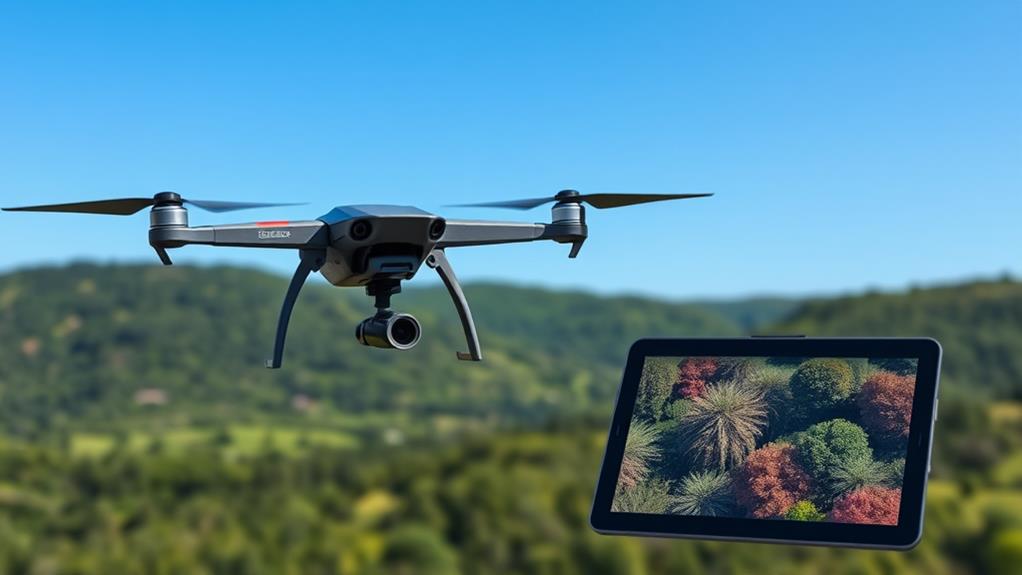
Advanced drone features can considerably enhance your aerial photography and videography, making every flight more dynamic and enjoyable. By incorporating these advanced capabilities into your drone training, you can create successful drone operations that captivate your audience.
Here are three key features to explore:
- ActiveTrack: This mode allows your drone to automatically follow a subject while maintaining ideal framing and distance, simplifying your filming process.
- QuickShots: Use pre-programmed flight paths that execute dynamic maneuvers, producing cinematic videos with minimal effort, perfect for Aerial Service applications.
- Hyperlapse: Capture stunning time-lapse videos by taking images at set intervals while the drone moves along a predetermined path.
Additionally, familiarize yourself with obstacle avoidance features, which guarantee safe navigation and prevent collisions, especially in challenging environments.
You can also leverage WayPoints and MasterShots to program complex flight paths, capturing diverse aerial perspectives without needing manual input during the flight.
With these advanced drone features, you'll elevate your aerial photography game, making every flight a memorable experience.
Emergency Procedures and Safety Protocols
When operating your drone, understanding emergency procedures and safety protocols is vital for a successful flight experience. First, maintain direct visual line of sight with your drone to enhance situational awareness and comply with regulations.
Familiarize yourself with the Return to Home (RTH) feature; this invaluable tool allows your drone to return to its takeoff point in case of signal loss or emergencies.
Implementing emergency protocols is essential. For instance, if you encounter unexpected situations, hover your drone to stabilize it, giving you time to assess and make informed decisions.
Use spotters to assist with monitoring the environment, as they can alert you to potential obstacles, further enhancing safety during your drone flight.
Additionally, know the procedures for loss of control. Understanding the available fail-safe options can help you mitigate risks and maintain control during emergencies.
By practicing these strategies, you'll not only improve your flying skills but also guarantee a safer experience for yourself and those around you.
Conclusion
In summary, coaching drone pilots effectively is like crafting a fine symphony; each element must harmonize for success. By focusing on pre-flight preparations, understanding regulations, and mastering flight techniques, you equip pilots with essential skills. Monitoring performance and utilizing advanced features further enhance their capabilities. Finally, instilling knowledge of emergency procedures guarantees safety in the skies. With these proven strategies, you can inspire confidence and competence in aspiring drone pilots, setting them on a path to excellence.
Leave a Reply