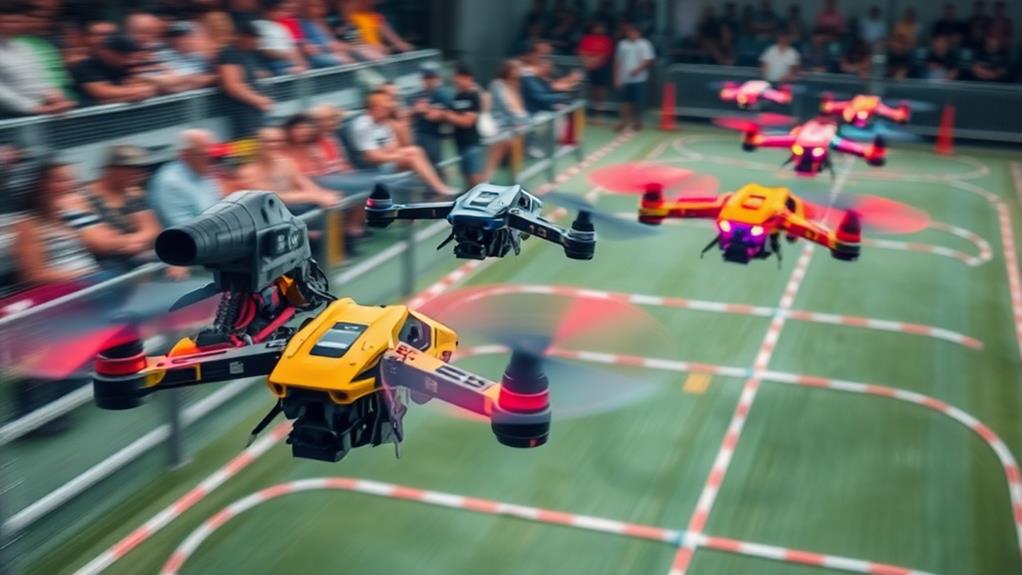
To boost your drone racing success, you should prioritize consistent training, expert analysis, and mental strategies. Regular practice helps build muscle memory while simulating race conditions enhances your preparedness. Watching top pilots offers valuable insights into techniques like ideal height and turn execution. Engaging in practice drills, such as slalom courses and time trials, sharpens your reflexes and agility. Utilizing FPV flight simulators allows for risk-free practice, and reviewing your flight recordings can identify areas for improvement. Finally, joining a community of racers fosters support and skill development, making you a more competitive pilot overall. Further insights await you.
Importance of Consistent Training

Consistent training is key to mastering drone racing. When you dedicate time to regular practice sessions, you develop muscle memory, allowing you to execute precise maneuvers with less conscious effort. This improvement directly impacts your lap times, making you a more formidable competitor.
To truly excel, you should simulate real race conditions during your practice. This approach builds good habits and prepares you mentally and physically for competitive environments. Additionally, choosing beginner-friendly drones can enhance your training experience, as they offer greater stability and control, especially during the initial learning phases choosing the right drone.
Setting specific goals for each flying practice is essential; it allows you to focus on areas needing improvement. Whether you're working on speed, accuracy, or maneuvering skills, pinpointing your objectives drives continuous skill development.
Engaging in daily flying practice, even in varied weather conditions, enhances your adaptability and resilience—traits that are vital for success in drone racing.
The correlation between consistent training and performance improvement is clear. Pilots who commit to regular practice experience measurable gains in their flying abilities and race outcomes.
Analyzing Techniques From Experts
To improve your drone racing skills, start by observing top pilots in action.
Analyzing their turn techniques and racing lines can reveal essential strategies that lead to faster lap times.
Pay special attention to their execution of advanced maneuvers like the Power Loop and the Matty Flip, as these showcase their technical mastery.
Observing Top Pilots
Many aspiring drone racers can benefit immensely from observing top pilots in action. By watching experienced pilots, you can analyze advanced flying techniques that enhance your racing performance. Pay attention to how they optimize positioning, manage height, and align with gates to greatly reduce lap times.
In addition, understanding the growth of drone racing as a spectator sport can offer insights into the strategies that make top pilots successful in competitive environments.
Observing these skilled pilots during practice sessions reveals specific strategies for handling turns and maneuvering course layouts more efficiently. Noticing how they maintain smooth flight paths and execute quick directional changes can help you improve your own flying efficiency and control.
Additionally, learning from the mistakes and successes of expert pilots through detailed race footage encourages you to adapt effective flying methods in real-world scenarios. Engaging in discussions with skilled pilots about their approaches and techniques fosters a deeper understanding of racing strategies and enhances your personal flying skills.
Whether it's through online videos or in-person practice sessions, make it a priority to observe and learn from the best in the field. By doing so, you'll develop valuable insights that can elevate your drone racing capabilities and set you on the path to success.
Analyzing Turn Techniques
Mastering turn techniques is vital for any drone racer looking to gain a competitive edge. Observing top pilots reveals that maintaining ideal height and positioning greatly enhances gate alignment, which can considerably reduce your lap times.
Effective maneuvering of turns often hinges on your ability to combine throttle management with precise stick movements. This combination leads to smoother shifts and improves your overall flying efficiency.
When analyzing the racing line, anticipate your angles before entering a turn. This practice can help decrease your entry speed while boosting your exit velocity.
Practicing tight turns is essential; focus on maintaining momentum instead of simply slowing down. This strategy enhances your agility and responsiveness, especially when traversing challenging course layouts.
Identifying and implementing specific turn techniques observed in competitive settings can lead to measurable improvements in your flying performance.
By sharpening your skills in these areas, you'll enhance your ability to tackle tight corners and complex sequences effectively.
Learning From Competition
Watching top pilots in action offers invaluable insights into effective racing techniques. By closely observing their performance during competitions, you can identify ideal gate alignment and turn execution that lead to faster lap times.
Engaging with skilled pilots during practice sessions also allows you to inquire about their techniques, enhancing your understanding of flying dynamics.
Participating in competitive events exposes you to diverse flying styles, fostering adaptability. You'll learn to adopt successful techniques that you observe in real-time, which can greatly impact your performance.
Reviewing performance metrics and race outcomes will help you assess your strengths and weaknesses, enabling targeted improvements in specific areas of your flying technique.
Furthermore, learning from expert pilots' experiences during pre-race mental strategies and post-race reflections contributes to building a competitive mindset essential for success. This mental aspect complements your physical practice, ensuring you're well-rounded as a racer.
Embracing these observations and interactions with top pilots won't only enhance your skills but also inspire continuous improvement in your approach to drone racing. In this dynamic sport, adaptability and a keen eye for effective techniques can set you apart from the competition.
Essential Practice Drills

To excel in drone racing, you need to incorporate fundamental practice drills that sharpen your skills and enhance your performance.
Start with slalom courses, which can greatly boost your reflexes and help you maneuver tight turns effectively. This is important for improving your lap times. Incorporate time trials into your training, as they simulate race conditions and challenge you to achieve both speed and accuracy under pressure.
Obstacle courses are another great option, enhancing your agility and spatial awareness. They allow you to practice maneuvering complex environments, which is essential in racing.
Consistent practice of specific drills, like figure 8 maneuvers, leads to measurable skill gains and increased muscle memory for precise control of your drone.
Lastly, don't underestimate the value of competitive simulations. Mock races with peers replicate actual race scenarios, helping you adapt and refine your strategies for events.
Developing Hand Strength
While honing your flying skills through practice drills is essential, developing hand strength is just as important for peak performance in drone racing.
Strong hands can greatly impact your control and focus, which are essential during intense races. Here are three effective exercises to boost your hand strength:
- Tennis Ball Squeezes: Squeeze a tennis ball for ten repetitions, three times daily. This exercise reduces fatigue during long flights and enhances overall control of the drone.
- Thumb Opposition Exercises: Incorporate these into your daily routine to improve finger strength, important for precise throttle and stick movements.
- Finger Abduction and Wrist Stretches: Regularly practicing these increases flexibility and strength in your hands, contributing to better reaction times and maneuverability.
Leveraging FPV Flight Simulators
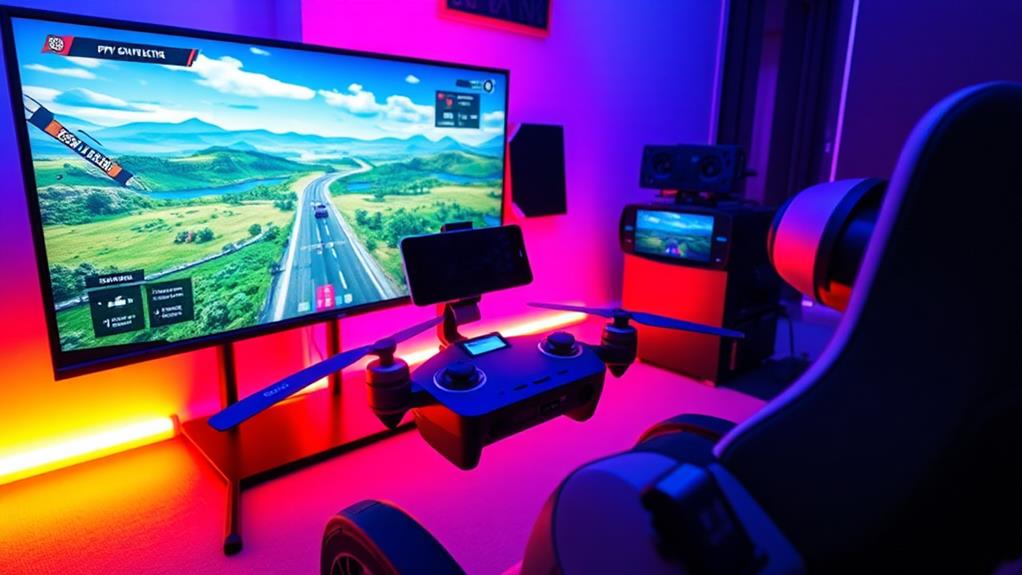
When it comes to enhancing your drone racing skills, leveraging FPV flight simulators can be a game changer. These advanced training tools, like Liftoff and FPV Freerider, replicate real-world physics and environments, allowing you to practice complex maneuvers without risking your physical drones.
You can explore various flying fields and time trial tracks that closely mimic MultiGP course challenges, offering invaluable preparation for competitive racing.
By utilizing FPV flight simulators, you can develop muscle memory through repeated drills. This practice enables you to perform complex tasks more instinctively during real-life racing scenarios. The simulators greatly reduce the learning curve for new pilots, granting you the experience and confidence needed before stepping into actual drone racing.
Moreover, engaging with FPV simulators provides a cost-effective training alternative. You can practice extensively without incurring expenses related to repairs or equipment loss, making it an efficient way to hone your skills.
In the fast-paced world of drone racing, these simulators can elevate your performance and help you achieve your racing goals more swiftly and safely. Embrace this technology, and watch your racing skills soar.
Utilizing DVR for Self-Review
Utilizing a DVR (Digital Video Recorder) for self-review can greatly enhance your drone racing performance. By analyzing your flight recordings, you can pinpoint specific areas that need improvement, such as:
- Identifying missed gates.
- Refining your racing techniques.
- Improving lap times.
Watching your DVR footage allows you to reinforce muscle memory by mimicking the stick movements as you fly along the routes seen in your videos. This practice enhances your control over the drone, making it easier to navigate tricky turns and obstacles.
You can also focus on timing exercises, using the recordings to determine the best approach for turns, which can lead to significant gains in speed. Engaging with past flight recordings solidifies your learning, helping you set specific goals for your upcoming practice sessions.
Whether it's correcting improper turns or optimizing your racing techniques, self-review through DVR enables you to adapt and improve continuously. Ultimately, the insights gained from your DVR can lead to remarkable improvements in your overall performance, making you a more competitive drone racer.
Mental Strategies for Success
When it comes to drone racing, mental strategies like visualization techniques and stress management are essential for success.
By picturing yourself maneuvering the course flawlessly, you can boost your confidence and performance on race day.
Additionally, practicing stress management methods, such as deep breathing, helps you stay calm and focused, allowing you to tackle high-pressure situations with ease.
Visualization Techniques
Visualization techniques are a powerful tool for drone racers looking to enhance their performance. By mentally rehearsing race scenarios, you can greatly improve your muscle memory and performance under pressure.
Here are three key benefits:
- Anticipate Challenges: Visualizing the racing course helps you foresee obstacles and refine your strategies for ideal navigation.
- Boost Confidence: Athletes report that picturing successful maneuvers enhances their confidence and reduces anxiety before races.
- Improve Focus and Decision-Making: Consistent practice of visualization reinforces positive outcomes, sharpening your focus and decision-making skills during high-stress environments.
Incorporating these visualization techniques into your training routine can lead to remarkable improvements.
Studies show that elite athletes who utilize these methods can enhance their performance by up to 20%. This mental game is essential, especially when facing challenging races.
By creating detailed mental images of the course and visualizing your success, you're not just preparing physically; you're also gearing up mentally.
As you practice these techniques, you'll find yourself more confident and capable of maneuvering through pressure-filled moments, ultimately leading to better results on race day.
Stress Management Strategies
Managing stress effectively is vital for drone racers aiming to perform at their best. Implementing stress management strategies can greatly enhance your racing experience and outcomes.
Start with grounding techniques, like deep breathing exercises, to calm your nerves and maintain focus before flights. This is essential for performing under pressure.
Incorporate visualization into your routine by picturing successful flight paths and race outcomes. This practice boosts your confidence and mental preparedness, making it easier to execute your plan during competitions.
Practicing mindfulness can also help reduce anxiety and improve concentration, allowing you to manage stress during high-stakes scenarios.
Setting realistic expectations is key. Focus on personal improvement rather than solely on winning, which alleviates pressure and enhances your enjoyment of the sport.
Additionally, engage in regular self-reflection after each race. Identify stress triggers and develop coping strategies to build resilience, enabling you to improve future performances.
Engaging With the Drone Community
Engaging with the drone community can greatly enhance your racing skills and overall experience. By connecting with fellow pilots, you'll find a supportive environment that fosters collaboration and skill sharing.
Here are three key benefits of engaging with the community:
- Practice Opportunities: Join local drone racing clubs where you can practice your flying techniques with others. These sessions often include group challenges that motivate you to improve.
- Mentorship: Experienced racers can offer valuable insights and mentorship. Learning from their techniques can expose you to different strategies that accelerate your growth.
- Networking and Competitions: Participating in events organized by leagues like MultiGP connects you with other pilots. This networking can lead to friendships and healthy competition, pushing you to refine your skills.
Online forums and social media groups are also excellent resources for staying updated on advancements and sharing tips.
Overview of MultiGP Racing

MultiGP Racing stands out as the premier drone racing league in the world, bringing together over 10,000 registered pilots across more than 375 chapters. This league organizes structured competitive events, such as Championships and Regional Series, designed to enhance engagement and skill development among participants.
Whether you're a novice or an experienced pilot, MultiGP makes drone racing accessible and enjoyable through its community support and resources.
As you immerse yourself in the world of MultiGP, you'll discover a platform that fosters collaboration among pilots. Sharing training techniques and experiences becomes crucial in improving your flying skills.
These competitive events encourage you to practice drills, helping you refine your techniques and strategies for racing success. The structured format of events not only enhances your skills but also builds a sense of camaraderie among participants.
MultiGP serves as a hub for professional development in drone racing, offering tools for those aspiring to pursue careers in the industry.
Conclusion
To sum up, consistent training is key to excelling in drone racing. While you might think expert techniques are only for top racers, remember that every champion started where you are now. By incorporating essential drills, developing hand strength, and utilizing simulators, you can greatly enhance your skills. Engaging with the drone community and reviewing your performances will provide valuable insights. With dedication and the right strategies, you can elevate your racing experience and enjoy the thrill of competition.
Leave a Reply