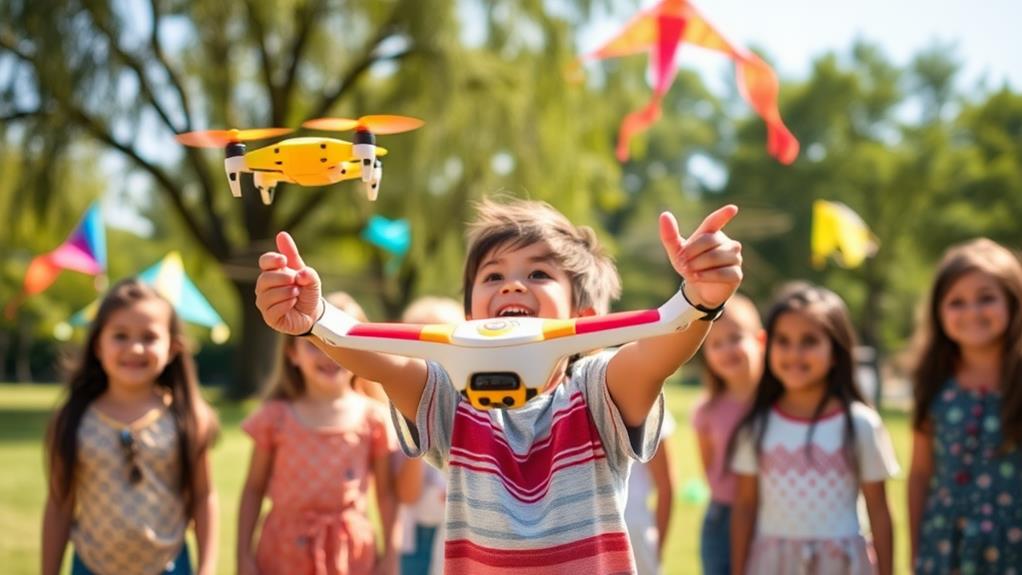
To effectively train kids to fly drones, start by establishing safety protocols, including the TRUST exam for regulatory knowledge. Choose beginner-friendly models with propeller guards to ease initial learning. Begin flying indoors to minimize wind challenges, and guarantee calm weather conditions for outdoor practice. Incorporate engaging activities and obstacle courses to enhance skills while maintaining enthusiasm. Assign roles within a team, emphasizing communication and collaboration for better engagement. Utilize educational resources like interactive apps and simulators to cultivate knowledge and skills. This structured approach lays a solid foundation for enjoyable and responsible drone flying experiences that can lead to further discoveries.
Understanding Regulatory Requirements

Before your child takes to the skies with a drone, it's important to understand the regulatory requirements set by the FAA. All recreational drone pilots, including kids, must complete the TRUST exam. This exam guarantees they grasp the rules of drone operation and safety practices essential for responsible flying.
Additionally, it's significant for parents to be aware that registration is mandatory for drones weighing between 0.55 lbs and 55 lbs, which promotes a culture of compliance among young operators FAA registration guidelines.
The TRUST exam covers critical topics like airspace restrictions and altitude limits, emphasizing that drones should fly below 400 feet. Understanding these regulations helps young drone pilots navigate their flying experiences safely and legally.
It's vital for them to learn about restricted areas and the potential consequences of flying in prohibited zones.
Obtaining the TRUST certificate is a straightforward process, usually done online in about 20 minutes. This quick completion makes it accessible for kids, enabling them to start their drone journey with the necessary knowledge.
The TRUST initiative aims to promote safe flying practices among all drone pilots, particularly targeting young and inexperienced users.
Practical Flying Tips for Beginners
Once your child is familiar with the regulatory requirements, it's time to focus on practical flying tips that will help them become confident drone pilots.
Start by encouraging them to fly indoors, where wind interference and control challenges are minimized. This controlled environment is ideal for beginners to learn how to fly without distractions.
Choosing beginner-friendly models, like those recommended for novice racers, will guarantee stability and control during initial flights. Additionally, opt for budget-friendly drones priced around $30-$40, especially those with propeller guards, to enhance safety during the initial learning phase focusing on durability.
Incorporate games and challenges into practice sessions to keep your child engaged and motivated. This approach not only makes learning fun but also encourages skill development.
As they practice, remind them to avoid flying in windy conditions and steer clear of trees, which can lead to accidents.
Establishing Safety Protocols
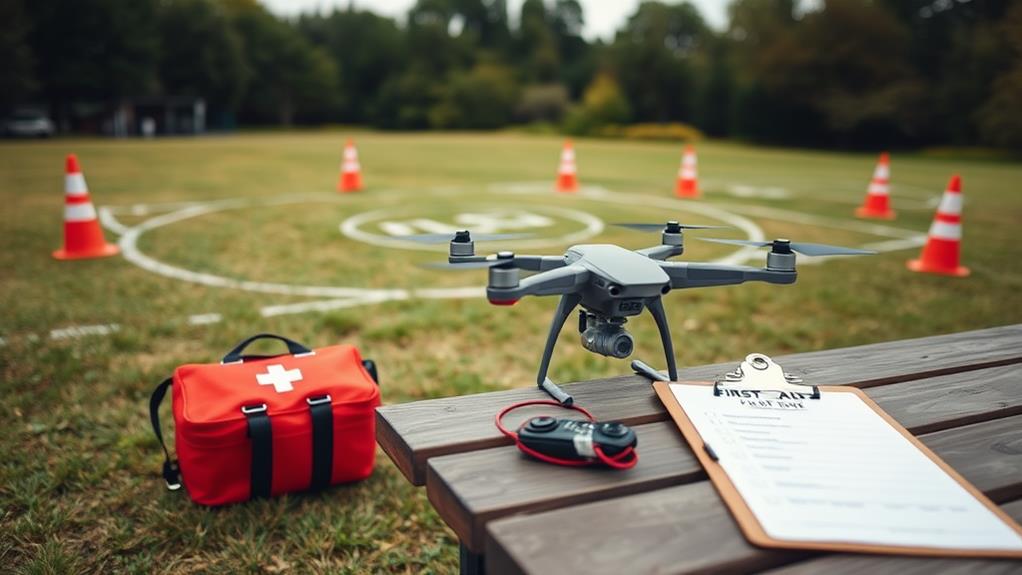
Establishing your child's safety protocols is vital for fostering responsible drone flying habits. Start by creating clear rules for drone flight, such as avoiding crowded areas and steering clear of animals. This not only promotes safety but also instills a sense of responsibility in young pilots.
Make sure the drone remains within the operator's line of sight at all times, as this is a key requirement for safe flying and enhances real-time decision-making to avoid collisions with obstacles and wildlife maintaining visual line of sight.
Communication is essential within the Drone Team. Encourage your child to maintain eye contact and share responsibilities during operation to enhance overall safety. Before each flight session, review safety protocols to reinforce understanding and retention of the vital rules. This practice helps solidify their knowledge and boosts confidence.
Additionally, foster an environment of open discussion about safety concerns and experiences. This dialogue encourages accountability and enhances awareness among young drone pilots.
Developing Learning Techniques
To effectively develop learning techniques for kids flying drones, you can incorporate engaging activities that make the experience enjoyable and educational.
Using visual cues, like colored lights, helps them orient themselves and understand directional movements, while obstacle courses encourage creative exploration and skill practice.
Additionally, integrating drone-related apps and simulators offers a safe platform for young pilots to build confidence before taking to the skies.
Engaging Learning Activities
Engaging kids in drone training can be both fun and educational, especially when you incorporate interactive activities.
Start by utilizing drone-related apps and simulators to create a safe learning environment where kids can practice their piloting skills without the pressure of actual flights. This builds confidence and familiarity with drone controls.
Next, consider setting up obstacle courses that introduce fun challenges. Encourage kids to navigate through various pathways, enhancing their control and maneuvering abilities while keeping the experience enjoyable.
You can also incorporate hands-on engineering tasks, like mapping out flight patterns or building custom drones, to promote critical thinking and problem-solving skills.
Integrating games that involve racing or completing specific tasks can greatly boost engagement. Competition adds excitement, motivating kids to refine their drone piloting skills creatively.
These engaging learning activities not only make the process enjoyable but also foster a deeper understanding of drone mechanics and navigation.
Visual Cues for Orientation
Building on the fun activities already explored, visual cues play a significant role in helping kids master drone flying. By utilizing colored lights on drones, you can help young pilots easily identify directional orientation and maintain visual awareness during flight. This simple addition enhances their ability to understand where the drone is heading and how to control it.
Incorporating visual cues like arrows or patterns on the ground can guide kids in grasping their drone's movement and positioning. Encourage them to use environmental markers, such as trees or buildings, to develop spatial awareness. This practice not only aids navigation but also enhances their ability to create engaging drone footage.
Teach kids to associate specific visual cues with flight maneuvers; for instance, tilting the drone toward a colored landmark can signal turns or altitude adjustments.
Additionally, implementing drone simulators with visual orientation tools allows them to practice in a controlled, virtual environment. This way, they can refine their skills before taking to the skies.
Encouraging Creative Exploration
Encouraging kids to explore creatively while flying drones can ignite their passion for learning and problem-solving. By incorporating fun elements into their training, you can foster their development as skilled drone pilots.
Consider these engaging techniques:
- Create obstacle courses that challenge their flying skills and spark innovative thinking.
- Use drone-related apps and simulators to provide a safe space for practice before taking to the skies.
- Implement colored lights or visual markers on the drones to teach orientation and improve their spatial awareness.
- Set creative challenges, like capturing specific images or performing unique aerial maneuvers, to keep their imaginations alive.
- Promote teamwork by assigning roles within flying activities, allowing kids to collaborate and share ideas.
These activities not only enhance their technical abilities but also encourage them to think outside the box.
As they navigate creative challenges while flying, they'll develop critical problem-solving skills that extend beyond the world of drones.
Encouraging Team Participation

Fostering teamwork in drone training not only enhances learning but also prepares kids for real-life collaboration. Assigning specific roles within the drone team, such as Remote Pilot in Command (PIC), Visual Observer (VO), and Safety Manager, creates a structured environment. This helps students understand the importance of team participation in drone operations.
By encouraging input from all team members during flight planning and execution, you promote a sense of ownership and responsibility, which elevates engagement and learning outcomes. Implementing a team-based approach to drone flying guarantees tasks are managed collectively, preventing any single student from feeling overwhelmed.
This structure allows for easier control of the drone, particularly in complex scenarios like search and rescue missions, where every role is vital for success. Regularly rotating roles within the team broadens each student's understanding of drone operation, enhancing their skill set.
Additionally, emphasizing communication and collaboration during drone flights cultivates essential social skills. These experiences not only benefit their current training but also prepare them for future teamwork in various contexts.
Utilizing Educational Resources
Integrating the right educational resources can greatly enhance your drone training program. As you immerse yourself in the world of drone operation, utilizing structured lesson plans tailored for educators will keep students engaged and safe.
Programs like Drone Legends provide extensive resources that include hands-on activities, encouraging collaboration among learners.
Consider these essential resources to elevate your training:
- Expert curriculum plans focused on drone safety
- Interactive apps that bolster theoretical knowledge
- Simulators for developing practical flying skills
- Networking opportunities with fellow educators
- Continuous learning programs to enhance teaching methods
Conclusion
Training kids to fly drones can be rewarding, much like teaching a child to ride a bike. At first, it may seem intimidating, but with practice and guidance, they'll gain confidence and skill. By understanding regulations, establishing safety protocols, and encouraging teamwork, you create an enriching experience. Remember, patience is key; just as a bike ride leads to freedom, mastering a drone can open up a world of creativity and exploration for young pilots.
Leave a Reply