
To become a skilled beginner drone racer, focus on regular practice to enhance your muscle memory and confidence. Utilize drone racing simulators like EreaDrone 2023 for a risk-free learning environment, allowing you to master maneuvers and refine your reaction times. Familiarize yourself with local regulations to compete legally and safely. Joining racing communities exposes you to experienced pilots and valuable mentorship. Set realistic, incremental goals to track your skill progression effectively. Finally, analyze your performance by reviewing recorded footage, helping you identify areas that need improvement. There's much more to explore that can take your racing to the next level.
Importance of Regular Practice

Regular practice is essential for any beginner drone racer looking to improve their skills. Consistent flying sessions enable you to build muscle memory and enhance your piloting abilities. By allocating specific time each week for practice flying, you establish a routine that leads to gradual skill enhancement over time.
Starting with the basics, such as takeoff, landing, and directional flying, lays a strong foundation before you tackle more complex maneuvers and competitive racing. Additionally, utilizing FPV flight simulators can provide a risk-free environment to refine your skills and enhance your confidence.
As you become more comfortable with your drone through regular practice, you'll notice better performance in races. This improved confidence often translates to faster lap times, giving you a competitive edge. Treating your practice sessions like actual races instills good habits and prepares you mentally and physically for real racing scenarios.
Incorporating these practices into your routine not only sharpens your control but also boosts your overall enjoyment of the sport. Remember, the more you practice flying, the better you'll become. Commit to your training, and you'll see significant improvements in your ability to improve your drone and tackle the challenges of drone racing.
Utilizing Simulators for Training
Using drone racing simulators can greatly enhance your training experience as a beginner. These simulators, like EreaDrone 2023, provide a risk-free environment where you can practice and learn essential flying skills without worrying about damaging real equipment.
With features like track editors and multiplayer modes, you can create custom courses and compete against others online, closely mimicking real racing scenarios. Additionally, comprehensive guides available in the training resources can further assist you in understanding the intricacies of drone operation.
By utilizing a drone racing simulator, you'll master basic maneuvers and refine your reaction times—skills that are crucial for success in actual races. The diverse scenarios presented in simulators prepare you for various challenges you might encounter in real-world racing environments. This helps improve your adaptability and problem-solving skills, essential traits for any racer.
Moreover, simulators are a cost-effective training tool, allowing you to engage in consistent practice sessions that can considerably enhance your flying proficiency over time.
As you log hours in the simulator, your confidence and skills will grow, making you better prepared for the thrilling world of drone racing. Embrace the opportunity to learn and improve, and you'll find yourself ready to take on real challenges with ease.
Understanding Local Regulations
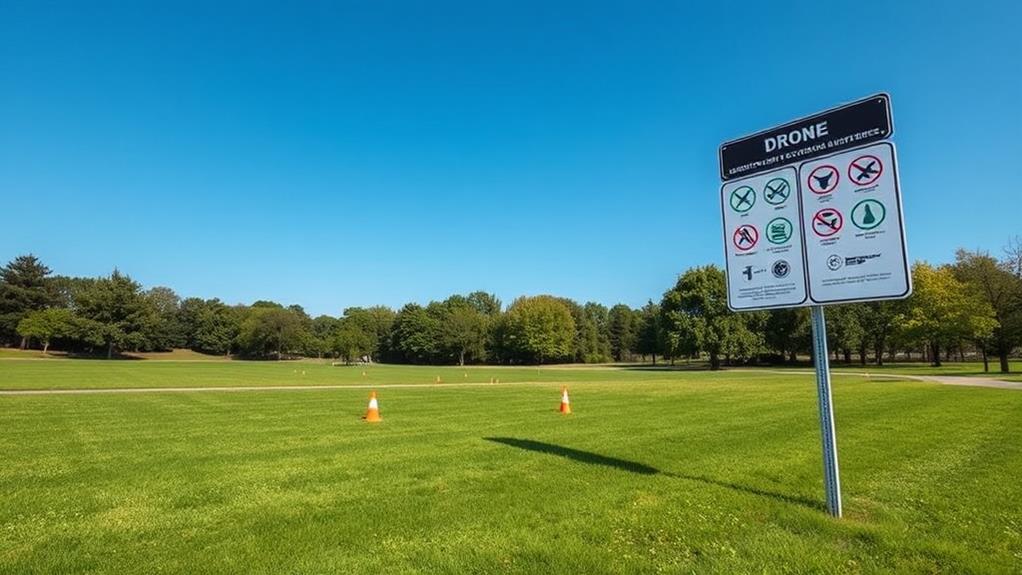
Maneuvering the world of drone racing requires more than just flying skills; understanding local regulations is essential for any beginner. First, familiarize yourself with the Federal Aviation Administration (FAA) regulations in the U.S. These rules mandate that drone operators adhere to specific guidelines, including altitude limits, no-fly zones, and registration for drones weighing over 0.55 pounds.
Additionally, awareness of airspace classification is critical for legal drone operations, especially in areas with controlled airspace safety regulations and risk management.
It's important to check local laws and ordinances, as they may impose additional restrictions on drone flying. Some areas designate specific flying zones or have time limitations, so you must stay compliant.
If you plan to use your drone for commercial purposes, obtaining a Remote Pilot Certificate through the FAA's Part 107 exam is necessary. This certification includes knowledge of airspace classifications and operational limitations.
Additionally, staying informed about changes in drone legislation can help you navigate evolving regulations. Engaging with local drone racing communities or clubs can also provide insights into regional regulations and best practices for legal flying.
Joining Racing Communities
Joining racing communities is a smart move for any beginner drone racer looking to improve.
By connecting with experienced pilots, you can gain valuable insights and mentorship that can fast-track your skills.
Plus, participating in local events not only boosts your confidence but also helps you build a network for resource sharing and collaboration.
Connecting With Experienced Pilots
Connecting with experienced pilots through local and online racing communities can greatly enhance your skills as a beginner drone racer. By joining these communities, you gain access to invaluable resources, insights, and support that seasoned pilots offer. They're enthusiastic to share their knowledge and techniques, which can considerably boost your confidence and proficiency.
Participating in these communities often leads to networking opportunities with experienced pilots who may become mentors. This mentorship can provide personalized advice and constructive feedback, helping you refine your flying skills.
Additionally, many drone racing communities, such as MultiGP, organize events that introduce you to the competitive landscape. These structured programs not only clarify the rules of racing but also allow you to practice in a competitive setting.
Moreover, engaging with fellow pilots fosters motivation and dedication to improvement. Sharing experiences with others in the drone racing community creates a supportive environment where everyone encourages one another to do better.
Whether you're seeking advice or simply looking to connect, building relationships with experienced pilots is essential to your growth as a drone racer. Don't underestimate the power of community in honing your skills!
Participating in Local Events
Participating in local events is a fantastic way for beginner drone racers to gain hands-on experience and enhance their skills. By joining local racing communities, you'll find numerous opportunities to engage in organized races and practice sessions.
This structured environment is perfect for building your confidence while refining your techniques.
- Connect with experienced pilots who can offer invaluable tips and mentorship.
- Experience the thrill of racing while receiving constructive feedback from fellow racers.
- Enjoy a supportive atmosphere that motivates you to practice consistently.
Local racing events not only help you improve your piloting skills but also foster camaraderie among pilots.
You'll be surrounded by like-minded individuals who share your passion, making it easier to stay motivated and committed.
Plus, many communities provide access to shared resources and equipment, allowing you to learn about different drone models without breaking the bank.
Networking and Resource Sharing
Many beginner drone racers find that engaging in racing communities opens doors to networking and resource sharing that greatly enhances their learning experience.
By joining local and online groups, you gain access to a wealth of knowledge from over 30,000 registered pilots in the MultiGP league. These communities not only offer opportunities for skill enhancement through regular events and races, but also provide a platform for receiving constructive feedback from experienced pilots.
Networking within these communities often leads to invaluable mentorship opportunities. As a beginner, you can learn advanced techniques and strategies directly from seasoned racers.
This supportive environment fosters motivation and commitment to improvement, as group practice sessions encourage healthy competition and camaraderie among members.
Moreover, engaging with fellow pilots on social media platforms like Facebook and Twitter can markedly boost your resource sharing.
You'll find it easier to access tips, tutorials, and event information, all of which are essential for your growth as a racer.
Staying Updated on Technology

How can you stay ahead in the fast-paced world of drone racing? Staying updated on technology is essential for gaining a competitive edge in the drone racing league. To keep your skills sharp and your performance ideal, here are some effective strategies:
- Join online forums to discuss the latest techniques and innovations.
- Attend trade shows for hands-on experience and insights into emerging technologies.
- Follow reputable manufacturers on social media for real-time updates on new releases.
Engaging with these resources not only enhances your understanding of drone design and flight software but also keeps you in touch with the racing community. Platforms like Reddit and Facebook are excellent for participating in discussions about how to apply new technologies to improve your racing skills.
Moreover, reading blogs dedicated to drone technology can help you discover new models and features that might give you an advantage during races.
By staying informed, you can adapt your strategies and equipment to align with current trends, ensuring you're always one step ahead of the competition.
Essential Equipment for Beginners
To get started in drone racing, you'll need some essential gear that lays the foundation for your skills.
Choosing the right racing drone, like a beginner-friendly model or a custom build, is vital for developing speed and agility.
Along with must-have accessories like FPV goggles and a reliable remote controller, having extra batteries and repair tools can greatly enhance your training sessions.
Must-Have Gear
When starting your journey in drone racing, having the right gear is essential for success and enjoyment. Investing in must-have gear not only enhances your experience but also amplifies your skills.
Here are three key items you shouldn't overlook:
- Racing Drone: A high-performance racing drone, like the Blade Nano QX2 at around $159, is designed for speed and agility, giving you the edge as a beginner.
- FPV Goggles: Quality FPV goggles, such as the Fat Shark Teleporter V4 priced at about $199.99, immerse you in the race, allowing you to navigate obstacles and experience the thrill firsthand.
- Remote Controller: A reliable remote controller like the DSMX transmitter (Spektrum 1000 DXe) for about $59.48 guarantees precise control over your drone, making your flying experience smoother.
Additionally, don't forget to stock up on multiple LiPo batteries for extended flight times and invest in essential tools and spare parts for maintenance.
Having the right gear not only prepares you for races but also greatly enhances your learning curve, making your entry into the exciting world of drone racing enjoyable and rewarding.
Choosing Your Drone
Selecting the right drone is an essential step in your racing journey. For beginners, the Blade Nano QX2 is highly recommended, priced at $159. Its lightweight design and durability make it perfect for indoor FPV racing, helping you build fundamental skills without the risk of major crashes.
Choosing your drone also involves selecting a quality RC transmitter. The Spektrum 1000 DXe, available for $59.48, offers precise control and customizable settings, enhancing your performance during races.
To elevate your experience further, investing in Fat Shark Teleporter V4 FPV goggles at $199.99 is a smart choice. These goggles provide immersive first-person visuals, vital for maneuvering racing courses effectively.
When assembling your racing drone, remember that it typically consists of key components like frames, motors, ESCs, and propellers. Customization options are available to fit different budgets and skill levels.
Lastly, consider your battery choices. Higher capacity LiPo batteries allow for longer flight times, and starting with multiple batteries will guarantee you can practice without frequent downtime.
Essential Accessories Overview
Accessories play a pivotal role in enhancing your drone racing experience, especially as a beginner. By equipping yourself with the right gear, you'll not only improve your skills but also enjoy a more immersive experience.
Below are some essential accessories every novice drone pilot should consider:
- Racing Drone: The Blade Nano QX2, priced at approximately $159, is lightweight and designed for speed and agility, making it perfect for beginners.
- FPV Goggles: High-quality goggles like the Fat Shark Teleporter V4 (around $199.99) provide an immersive flying experience, allowing you to see through your drone's eyes.
- RC Transmitter: The Spektrum 1000 DXe, costing about $59.48, offers precise control and customization of your drone settings, vital for mastering your flying skills.
In addition to these key items, having multiple LiPo batteries will guarantee longer flight times, while tools and spare parts are essential for maintenance and repairs.
Investing in these fundamental accessories will greatly elevate your drone racing journey, helping you become a more skilled and confident pilot.
Learning to Fly Effectively
Mastering the basics of drone flying is vital for beginners aiming to excel in racing. Start your journey with simulator training on platforms like EreaDrone 2023, where you can learn the basics in a risk-free environment. Focus on fundamental maneuvers such as takeoff, landing, and directional flying.
Once you've got a handle on those, gradually increase your flying complexity. Practice controlled flights that emphasize skills like hovering and guiding through gates before moving on to advanced techniques.
Joining a local racing community can greatly enhance your learning curve. You'll benefit from shared knowledge, experiences, and valuable feedback from fellow racers.
Setting realistic and incremental goals during practice sessions is essential. This approach helps build confidence and skill, allowing you to progress without feeling overwhelmed.
Consistency is key; treat your training sessions with the same seriousness as actual races. By doing so, you'll develop good habits that will improve your overall performance.
Racing Etiquette and Safety
As you progress in your drone racing journey, understanding racing etiquette and safety becomes just as important as honing your flying skills.
Proper racing etiquette fosters a respectful and enjoyable environment for everyone involved, while prioritizing safety guarantees that you and your fellow pilots can race without unnecessary risks.
Here are a few essential points to keep in mind:
- Always adhere to local regulations to avoid fines or disqualification.
- Communicate effectively with other pilots to prevent collisions.
- Wear appropriate safety gear like goggles and helmets to minimize injury risks.
Flying in designated areas approved for drone racing is vital for safety.
This helps reduce risks and keeps everyone safe while enjoying the thrill of racing.
Staying aware of your surroundings will allow you to react quickly to unexpected obstacles, guaranteeing a smoother racing experience.
Building Skills Through Experience
Building skills through experience is essential for any beginner drone racer. Engaging in regular practice sessions, ideally scheduled weekly, helps you master basic maneuvers like takeoff and landing before tackling more complex courses.
Utilizing simulators, such as EreaDrone 2023, allows you to refine your reaction times in a risk-free environment, giving you the chance to familiarize yourself with various flying scenarios.
Joining local racing communities can greatly enhance your learning experience. These communities often host events where you can gain hands-on experience and receive valuable insights from more experienced pilots. It's a great way to connect with others who share your passion and learn from their expertise.
Setting realistic, incremental goals during your practice sessions is important for building confidence. As you hone your essential flying skills, you'll find that you're better equipped to tackle new challenges that arise.
Analyzing Performance for Improvement
After each flying session, take a moment to self-criticize your performance; this can reveal specific weaknesses that you can work on in future practices.
Watching recorded footage of your race runs also offers valuable insights, helping you spot areas for improvement like line selection and throttle control.
Self-Critique After Sessions
Self-critique serves as an essential tool for drone racers looking to sharpen their skills. After each flying session, taking time to reflect on your performance can help you identify specific weaknesses in your maneuvers and improve upon them in future practices. By focusing on particular aspects of your flying, such as throttle control or cornering techniques, you'll gain valuable insights that lead to better performance.
- You'll feel empowered as you pinpoint areas needing enhancement.
- Improved skills will boost your confidence on race day.
- Each session becomes a stepping stone toward mastery.
Implementing a consistent self-critique routine can greatly enhance your adaptability and readiness for the unpredictable challenges of race day. Analyzing your race lines for ideal entry and exit speeds will refine your strategies, helping you achieve better lap times.
Analyze Race Footage
Race footage analysis is a powerful tool for drone racers enthusiastic to elevate their skills. By taking the time to analyze race footage, you can pinpoint specific maneuvers that need improvement, such as cornering techniques and throttle control. These insights can greatly enhance your overall performance.
As you review your footage, pay attention to the ideal race lines. Understanding the best entry and exit speeds for different sections of the course can give you an edge in competitive settings.
Additionally, analyzing your reaction times and decision-making during high-pressure situations helps foster adaptability in future races.
Comparing your performances against experienced pilots' footage is another valuable strategy. By observing their advanced techniques and strategies, you can incorporate these lessons into your own racing style.
Don't forget to document your progress through recorded races. This practice not only builds confidence but also allows you to track improvements over time and set targeted goals for skill development.
Conclusion
To summarize, mastering drone racing takes dedication and smart training techniques. Did you know that regular practice can improve your lap times by up to 30%? By utilizing simulators, understanding regulations, and engaging with communities, you'll sharpen your skills effectively. Emphasizing safety and racing etiquette guarantees a respectful environment for all. Keep analyzing your performance, and you'll see continuous improvement. With commitment and the right approach, you can elevate your drone racing experience to new heights.
Leave a Reply