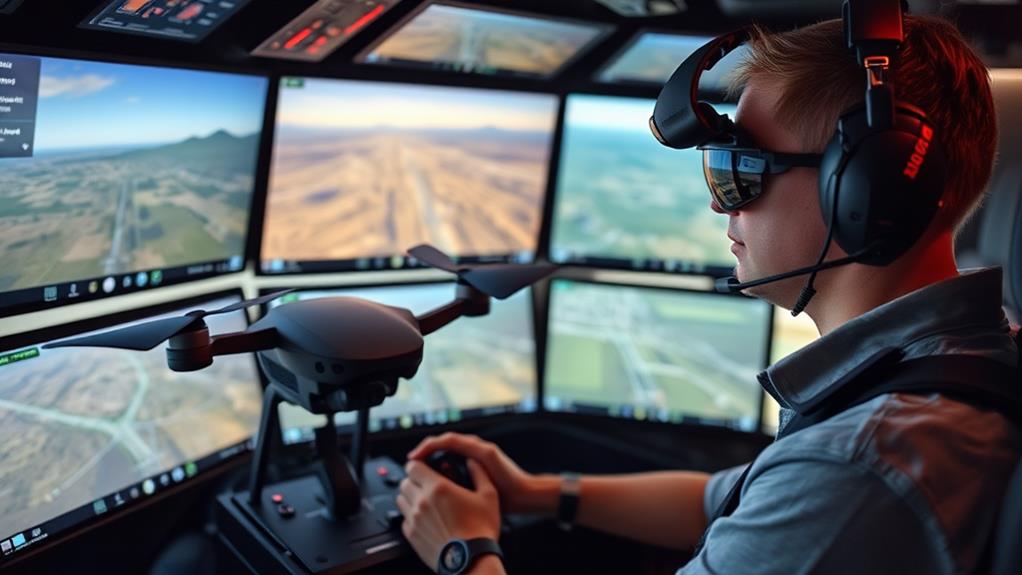
Using simulation training for drone pilots is vital because it offers a safe environment to practice complex maneuvers and emergency responses. You can refine your decision-making skills without the risks tied to actual flight training. High-fidelity simulators replicate various weather conditions, enhancing your experience and confidence. This cost-effective approach allows for repeated practice, making skill development more accessible. Furthermore, realistic feedback from advanced graphics helps you understand drone behavior better. As you enhance your skills, you're also meeting regulatory requirements essential for pilot certification. Stick around to discover more about the future of drone training and its innovative techniques.
Benefits of Simulation Training
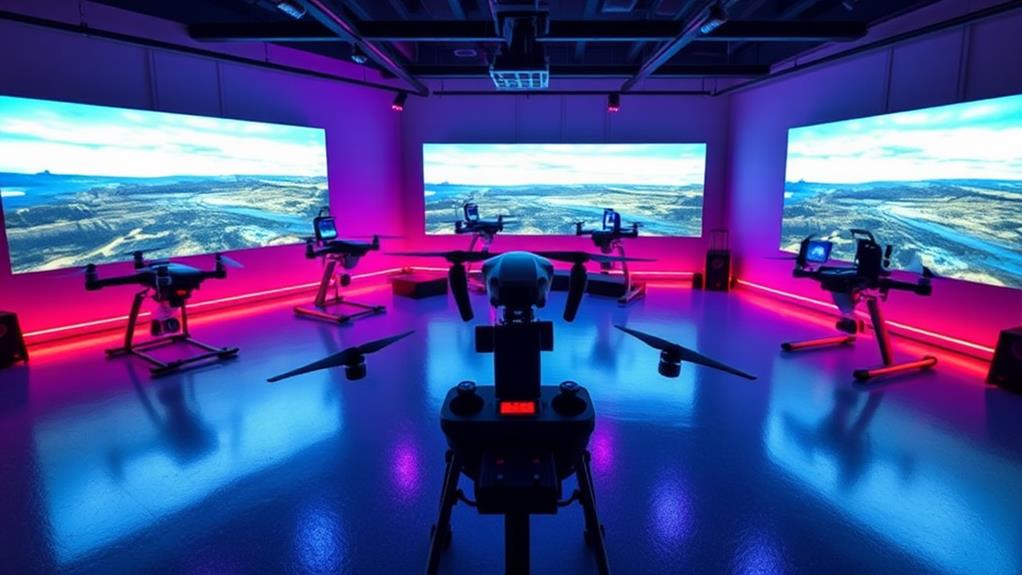
Utilizing simulation training offers drone pilots a multitude of benefits that enhance their skills and safety. One of the primary advantages is the safe environment it provides, allowing you to practice complex maneuvers and emergency procedures without risking damage to real drones or endangering personnel.
High-fidelity simulators replicate realistic scenarios, including extreme weather conditions, which means you can develop your flying skills in diverse environments, preparing you for actual flight challenges.
Additionally, simulation training is a cost-effective alternative to traditional flight training. It notably reduces expenses related to maintenance, repairs, and flight fees, making it an attractive option for both individual pilots and organizations.
You can repeatedly practice specific maneuvers and mission scenarios, which helps improve your decision-making skills and adaptive flying capabilities.
Moreover, by integrating advanced technology, such as high-quality graphics and physics engines, simulation training enhances skill transfer from the virtual environment to real-life operations.
This guarantees that you're well-equipped to handle any challenges you might face in the field. Overall, embracing simulation training is a smart way to elevate your drone piloting skills in a controlled, efficient manner.
Key Simulation Techniques
In the domain of drone piloting, mastering key simulation techniques is essential for developing proficiency and confidence. Utilizing advanced simulation technology, you can immerse yourself in realistic training environments that mimic real-world flying dynamics. This allows you to practice your skills without the risks associated with actual flight.
Here are some key simulation techniques to evaluate:
- High-fidelity simulations: Experience immersive environments that replicate complex maneuvers safely.
- Customizable training scenarios: Tailor your training to include varied weather conditions and specific mission profiles.
- Cost-effective practice: Reduce expenses related to maintenance or flight fees while getting ample practice.
- Realistic feedback: Advanced graphics and physics engines help you understand drone behavior, aiding skill transfer to real flights.
- Rapid skill development: Simulation training accelerates learning, combining theoretical knowledge with practical applications in a safe and controlled environment.
Enhancing Pilot Decision-Making
Mastering key simulation techniques not only builds foundational skills but also enhances your decision-making abilities in the cockpit. Through immersive simulation training, you can practice making critical choices under pressure without facing real-world consequences.
High-fidelity simulators recreate complex environments and emergency procedures, allowing you to refine your skills in various scenarios. Additionally, understanding local UAV regulations through simulated environments can further prepare you for real-life racing conditions.
Research shows that pilots who engage in simulator training demonstrate improved situational awareness and quicker reactions when confronted with unexpected challenges. By repeatedly experiencing diverse flight situations in simulations, you develop confidence and competence that translate into real-world operations.
The ability to analyze and reflect on your decisions during these simulated flights fosters a deeper understanding of the consequences and effectiveness of your choices. As you navigate through realistic scenarios, you'll learn to balance speed with accuracy in your decision-making process.
This practice not only prepares you for emergencies but also equips you with the tools to handle any situation that may arise during an actual mission. Ultimately, enhancing your decision-making skills through simulation training is essential for becoming a successful drone pilot in today's demanding aviation landscape.
Realistic Scenario Training
Realistic scenario training immerses you in lifelike environments that prepare you for the challenges of actual drone operations. Through simulation training, you can face realistic scenarios that mirror extreme weather conditions and emergency situations without the associated risks of real flights.
This high-fidelity training allows you to practice complex maneuvers in a controlled virtual environment, enhancing your readiness for real-world missions.
Here are some key benefits of realistic scenario training:
- Develops situational awareness by interpreting real-time data.
- Provides a safe space to rehearse strategies and decision-making processes.
- Allows customization of training scenarios to meet specific mission needs.
- Offers immediate feedback on drone behavior and response.
- Helps you build confidence in executing skills without breaking.
Measuring Pilot Performance
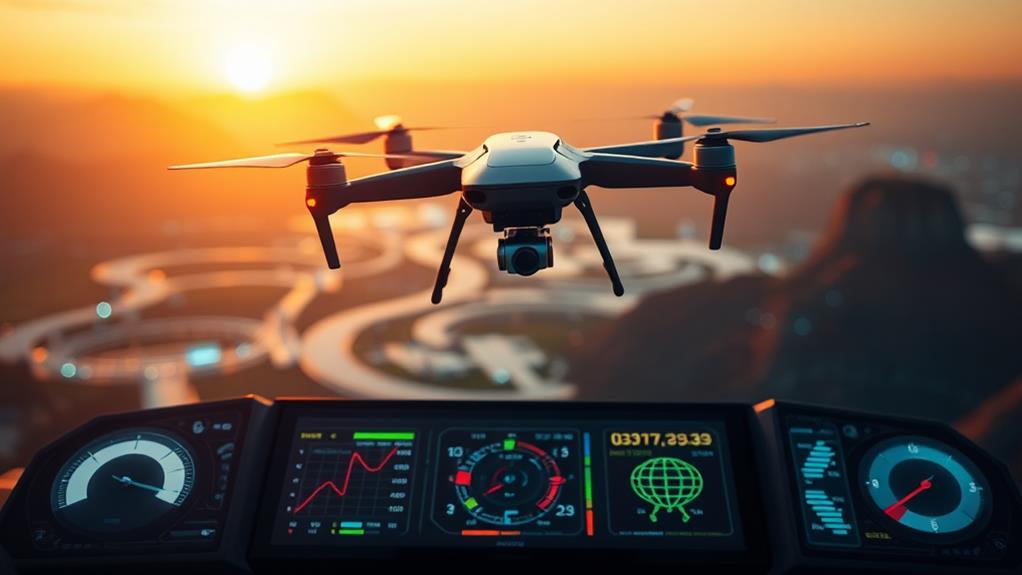
Effective training goes beyond just facing realistic scenarios; it also involves measuring how well you perform in those situations. In simulation training, pilot performance is assessed through precise metrics such as reaction times, accuracy in maneuvering, and adherence to mission protocols. This quantitative data allows you to understand your strengths and weaknesses.
Advanced simulators can track your decision-making processes, especially during emergency scenarios, providing valuable insights into your ability to manage stress and make critical choices under pressure. Performance analytics generated by these simulators highlight specific areas needing improvement, enabling you to focus on targeted training sessions that enhance your skills.
Moreover, real-time feedback mechanisms allow instructors to evaluate your performance instantly, facilitating immediate corrective actions that reinforce your learning. This immediate feedback can make a significant difference in your development as a drone pilot.
Regulatory Compliance Support
When it comes to regulatory compliance, simulator training plays an essential role in meeting certification requirements.
By incorporating simulator hours into your training, you not only enhance your skills but also align with safety standards set by organizations like the Civil Aviation Authority (CAA) and the European Union Aviation Safety Agency (EASA).
This approach helps guarantee that you're ready for real-world challenges while minimizing risks and costs associated with traditional flight training.
Certification Requirements Fulfillment
Simulator training plays an important role in fulfilling certification requirements for drone pilots, as regulatory bodies like the CAA and EASA recognize its value in pilot education. By incorporating simulation training into your learning process, you'll gain critical experience without the risks associated with real-world flight.
Many countries now require a specific number of simulator training hours as part of obtaining a drone pilot license, creating a standardized approach to pilot education.
Here are some key benefits of simulator training for aspiring drone operators:
- Meets certification requirements set by regulatory authorities.
- Provides a controlled environment for practicing emergency procedures.
- Enhances learning through realistic scenarios and complex maneuvers.
- Supports cost-effective pilot education, reducing financial burdens.
- Helps maintain high safety standards throughout training.
With the integration of simulator training into regulatory frameworks, you'll not only fulfill necessary certification requirements but also develop crucial skills that guarantee safety and compliance.
This modern approach to pilot education is significant in adapting to evolving regulations while preparing you for a successful career in drone operation.
Safety Standards Enhancement
Enhancing safety standards through rigorous training is fundamental for drone pilots, and simulator training plays a key role in this process. Regulatory agencies like the CAA and EASA recognize simulator training as a critical component for guaranteeing the safety and competency of drone pilots. By integrating simulation training into certification requirements, these agencies reinforce the legitimacy of this method in meeting safety standards.
Additionally, understanding drone operations and capabilities is imperative, as it allows pilots to effectively respond to various scenarios during simulation training, thereby enhancing their preparedness for real-world situations. This is particularly important when considering necessary drone safety guidelines that pilots must adhere to.
Simulation training allows you to practice emergency procedures without the risks associated with real-life aerial operations. This hands-on approach enables you to build confidence and skills that are essential in high-pressure situations.
Furthermore, incorporating this training into pilot education promotes cost-effectiveness, reducing the financial burden on training organizations while still adhering to strict safety regulations.
As the drone industry continues to evolve, ongoing advancements in simulation technology will likely enhance compliance with safety standards even further. This guarantees that you and your fellow drone pilots are well-prepared for the challenges ahead.
Integration of XR Technology
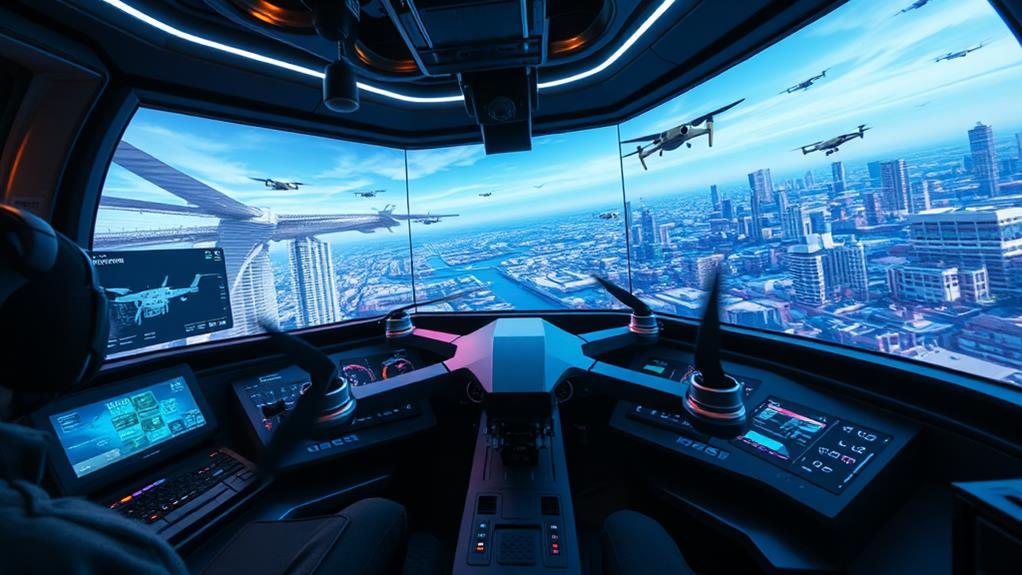
Many aspiring drone pilots are discovering the powerful advantages of integrating Extended Reality (XR) technology into their training programs. XR technology effectively addresses safety and workforce training challenges by providing immersive learning experiences that complement traditional instruction.
This innovative approach not only makes drone training more engaging but also guarantees that you gain practical skills in a controlled environment. Additionally, the use of comprehensive guides within XR training enhances understanding and accelerates the learning process.
Here are some key benefits of using XR technology in your training:
- Simulators provide a safe space to practice without real-world risks.
- Affordable training solutions make it accessible for everyone.
- Real-world applications allow you to apply what you learn immediately.
- Remote completion of training assignments keeps you on track, even during unexpected events.
- Research validates XR tools as effective educational aids when guided by skilled instructors.
Using XR technology, you can enhance your skills while maintaining preparedness. This is particularly vital during times like the pandemic, where traditional training might be disrupted.
Future of Drone Training
The future of drone training promises to redefine how pilots prepare for the skies. With advancements in simulation technology, you'll find that high-fidelity simulations will become vital for mastering piloting skills.
These advanced simulations will allow you to practice complex maneuvers and emergency scenarios in a safe, controlled environment, minimizing risks associated with real-world flying.
As autonomous operations gain traction, integration of artificial intelligence in training solutions will help you better understand interactions with these sophisticated systems. This will enhance your decision-making abilities in tactical situations, ensuring you're ready for any challenge.
The ongoing focus on safety management and cost-effectiveness will drive further investment in simulation tools, solidifying their role in both military and civilian drone education.
As missions grow more complex, continuous development of training methodologies will be essential. You'll need the skills to operate effectively in diverse environments, and simulation training will be your best ally.
In short, the future of drone training is bright, combining technology and innovation to produce qualified pilots prepared for the demands of modern aviation. Embracing these changes will elevate your readiness for the skies ahead.
Conclusion
To sum up, simulation training is essential for drone pilots, offering a safe environment to hone skills, make critical decisions, and prepare for unexpected situations. By integrating advanced technology, like XR, your training becomes more immersive and realistic, ensuring you're ready for real-world scenarios. As the drone industry continues to evolve, embracing simulation keeps you ahead of the curve, much like how flight simulators revolutionized pilot training decades ago. Invest in your future as a skilled drone operator today.
Leave a Reply