To improve your long-distance drone flight training, start with thorough pre-flight checks to guarantee your equipment is ready. Understand battery management to maximize flight time and safety. Familiarize yourself with your drone's capabilities, including its range and camera features. Plan your flight path by marking key waypoints, and maintain situational awareness during your flight, monitoring telemetry data. Practice using smooth control inputs for better stability, and always prioritize safety by knowing local regulations and preparing for emergencies. Mastering these tips can enhance your flying skills, leading to even greater discoveries on future flights.
Master Pre-Flight Checks

Before you take to the skies, mastering pre-flight checks is important for a safe and successful long-distance drone flight. Start with a thorough inspection of your drone's physical components. Check the motors, propellers, and battery connections to guarantee they're secure and free from damage. This step is critical for safe operation, especially when flying long distances.
Regular maintenance and pre-flight inspections play a fundamental role in confirming airworthiness, so be diligent in this process.
Next, verify your battery life. Make sure all batteries are fully charged and functioning properly, as power management is essential for extended flights.
After that, assess video transmission quality; make certain your antennas are unobstructed and positioned correctly to avoid signal loss during your journey.
Don't forget to confirm your GPS signal strength. A robust GPS connection is important for maintaining control and executing return-to-home functions.
Understand Battery Management
Effective battery management is vital for successful long-distance drone flights. Always monitor the battery voltage levels during flight. Most long-range drones, like the DJI Mavic 3, provide real-time battery status, helping you prevent unexpected power loss.
Consider using high-capacity batteries, such as the TB65 used in the DJI Matrice 350 RTK, which enhance cycle count and flight time, allowing longer missions without frequent landings. Understanding LiPo battery care and implementing proper charging practices can further optimize performance.
Following manufacturer guidelines for charging and storage is imperative. Make sure you charge batteries at the correct voltage and store them in a cool, dry place to extend lifespan and performance.
Safe discharge practices are equally important; lithium-polymer (LiPo) batteries should generally not be discharged below 3.3V per cell to avoid damage and minimize fire risk.
Regularly check for physical signs of wear on your batteries, like swelling or damage, and replace them promptly. This proactive approach not only assures drone safety but also maximizes your flying experience.
Familiarize With Flight Capabilities
To effectively plan your long-distance drone flights, you need to understand your drone's flight specifications. Familiarizing yourself with essential components like battery technology and communication systems can greatly enhance your flight experience.
Start by testing its range limits, like how far it can go without losing connection, and make sure you're aware of its maximum altitude and battery life. These details are essential for ensuring safe and successful missions while maximizing your drone's potential.
Understanding drone technology basics will help you make informed decisions during your training.
Understand Flight Specifications
Understanding your drone's flight specifications is essential for maximizing its performance and ensuring successful missions. When flying Long Range Drones, knowing the maximum range is fundamental. For example, the DJI Mavic 3 boasts a remarkable 9.3 miles (15 km), while the Autel Robotics EVO Lite+ offers a range of 7.5 miles (12 km). This knowledge helps you plan your flights effectively, ensuring you stay within safe limits.
Flight time is another key specification. The DJI Mavic 3 provides up to 46 minutes of flight time, allowing for extended missions without the need for frequent landings. Familiarizing yourself with drone specifications, such as camera capabilities, enhances your aerial photography. The DJI Mavic 3 features a 20 MP camera and 5.1K video recording, raising your content quality.
Additionally, understanding battery life and technology advancements is crucial. Models like the DJI Matrice 350 RTK utilize innovative TB65 batteries for improved efficiency.
Test Range Limits
Testing your drone's range limits is vital for mastering its flight capabilities. To effectively assess your drone's maximum range, gradually increase the distance during your flights while staying within the manufacturer's specified limits.
For example, the DJI Mavic 3 has a range of up to 9.3 miles (15 km). Understanding your drone's flight time under varying conditions is equally important, as factors like altitude, wind speed, and payload can greatly affect performance.
Here are three key aspects to take into account during your range tests:
- Monitor telemetry data: Keep an eye on signal strength and GPS connectivity. A strong connection is essential for long-distance operations and ensuring safety.
- Choose open areas: Conduct tests in unobstructed spaces to accurately gauge performance and avoid interference.
- Regular maintenance: Regularly calibrate and perform firmware updates on your drone. This helps enhance performance and addresses potential issues.
Practice Smooth Control Inputs
When flying your drone over long distances, smooth control inputs are essential for maintaining stability. Abrupt movements can lead to a loss of control and increase wind resistance, which is especially problematic during long-distance flights.
To enhance your flying skills, practice gradual throttle adjustments to prevent sudden altitude changes that could destabilize your drone, particularly in windy conditions.
Incorporate gentle yaw and pitch movements into your practice sessions. These gentle adjustments allow for a more fluid flight path and minimize the risk of overcorrecting, which can cause erratic behavior.
Focus on flying in straight lines and making gentle turns to help develop muscle memory for smoother control inputs. The more you practice, the more instinctive these movements will become.
During your practice sessions, closely monitor your drone's response to your control inputs. This feedback is vital for refining your technique, allowing you to adjust your actions based on how the drone behaves in various conditions.
Plan Your Flight Path
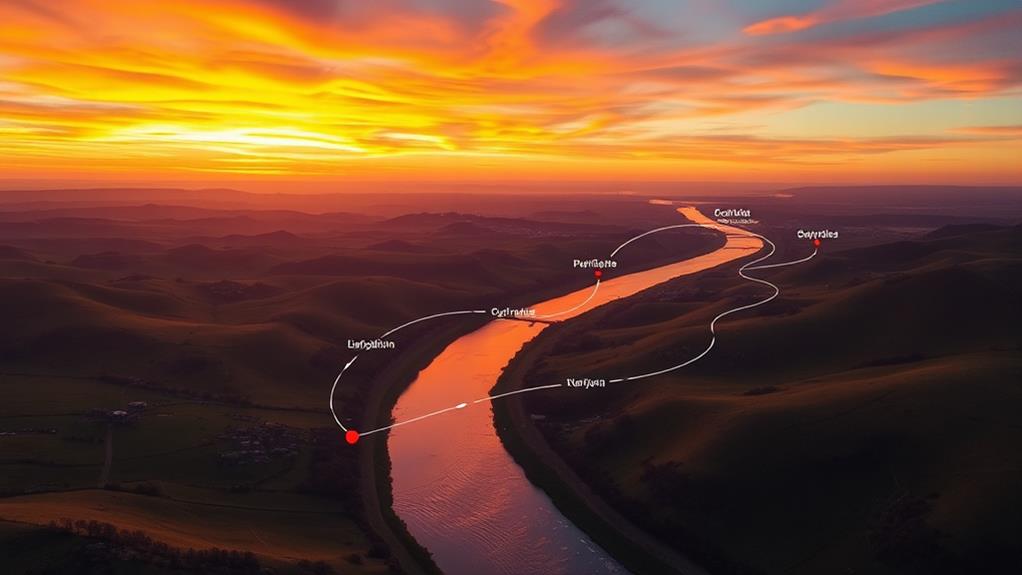
Before you launch your drone, it's essential to identify key waypoints along your flight path.
Make certain to assess no-fly zones to avoid legal issues and guarantee a safe journey.
Identify Key Waypoints
Planning your flight path starts with identifying key waypoints, which act as essential navigational aids for your drone. These waypoints help guarantee a smooth and efficient journey, especially during long-distance flights.
To maximize your drone's performance and maintain stability, consider the following when selecting your waypoints:
- Flight Times: Space your waypoints to guarantee manageable flight times, keeping in mind your drone's maximum range and battery life.
- Environmental Factors: Monitor wind direction and speed at each waypoint, as these can greatly impact your drone's performance.
- Return to Home (RTH): Set up RTH waypoints at critical points along your route. This guarantees your drone can safely navigate back in case of signal loss or battery depletion.
Utilizing mapping software can assist in plotting these waypoints while avoiding obstacles and adhering to local airspace regulations.
By strategically placing your waypoints, you can optimize battery life and maintain drone stability throughout your flight. Remember, a well-planned flight path not only enhances safety but also boosts your overall flying experience.
Assess No-Fly Zones
Maneuvering the skies with your drone requires a thorough understanding of no-fly zones to keep your flight legal and safe. Start by checking the FAA's B4UFLY app or website to identify no-fly zones in your intended flight area. These zones often include airports, military bases, and other restricted airspaces.
Familiarize yourself with local regulations and airspace classifications, as some areas have altitude limits that can impact your flight path.
Utilize online resources like sectional charts to visualize controlled airspace, ensuring your flight plan adheres to legal boundaries. It's important to plan your flight path to avoid crossing into no-fly zones. Consider using waypoint navigation to create a clear route that maintains compliance with regulations.
During your flight, maintain situational awareness by regularly monitoring your drone's location relative to designated no-fly zones. This practice helps prevent unintentional incursions that could lead to serious consequences.
Maintain Situational Awareness
Keeping situational awareness in check is essential for successful long-distance drone flights. To guarantee safe navigation and compliance with regulations, you must maintain your drone within visual line of sight (VLOS) whenever possible. This practice not only keeps you connected to your drone but also helps avoid potential obstacles.
Regularly monitoring telemetry data, including battery level, altitude, and distance from your home point, is vital. This information enables you to make informed decisions and prevents losing control during your flights.
Here are three key strategies to enhance your situational awareness:
- Utilize a Spotter: Having an observer on the ground can provide additional perspective and alert you to hazards or changes in conditions while you focus on piloting.
- Familiarize Yourself with the Environment: Identify potential obstacles such as trees, power lines, and buildings along your flight path to avoid collisions.
- Stay Updated on Weather Conditions: Keep an eye on wind speed and visibility, as adverse weather can adversely affect flight performance during long-distance operations.
Prioritize Safety Preparedness
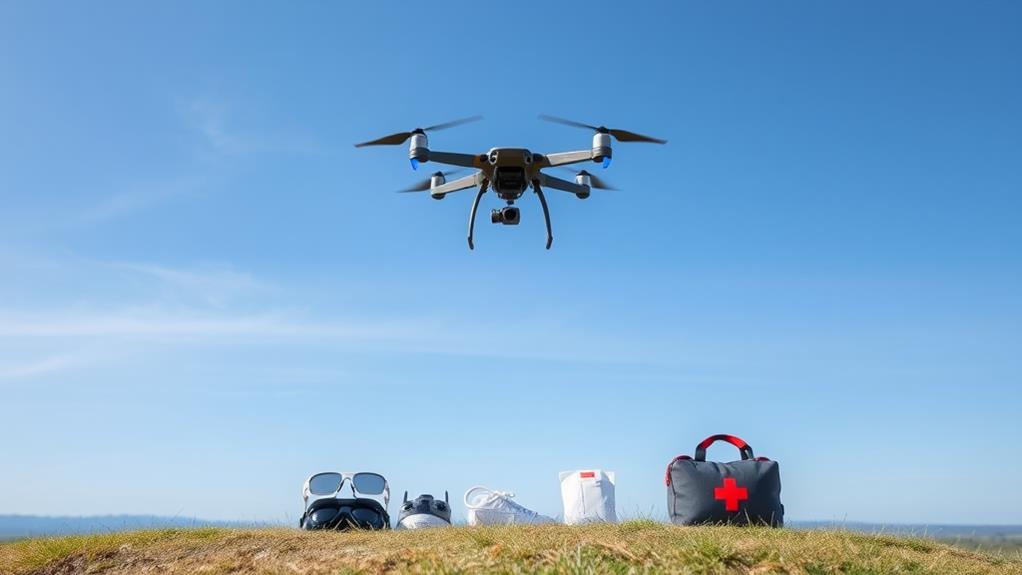
Maintaining situational awareness sets the stage for prioritizing safety preparedness during long-distance drone flights.
Before you fly your drone, conduct thorough pre-flight checks. This includes evaluating battery levels, guaranteeing motor integrity, and confirming GPS signal strength. These checks help assure that your drone is ready for safe operations.
Choose open launch areas free of obstacles to maintain situational awareness. Consistently monitor weather conditions to avoid unexpected hazards during your flight. Utilizing a spotter can greatly enhance safety, especially during long-range missions where visibility may be limited.
Familiarize yourself with local regulations to confirm compliance with BVLOS (Beyond Visual Line of Sight) requirements and altitude restrictions. This knowledge is essential for safe operations.
Before launching, always have a clear return-to-home strategy programmed into your drone. This strategy should include failsafe settings that automatically return the drone if the signal is lost or battery levels drop dangerously low.
Conclusion
In conclusion, mastering long-distance drone flight training involves thorough pre-flight checks, effective battery management, and a solid understanding of your drone's capabilities. By practicing smooth control inputs, planning your flight path, and maintaining situational awareness, you guarantee a successful experience. Finally, by prioritizing safety preparedness, you protect both your drone and its surroundings. Embrace these tips, refine your skills, and elevate your drone flying to new heights—because every flight is an opportunity for growth and adventure.
Leave a Reply